Updated news on the Gambino, Genovese, Bonanno, Lucchese and Colombo Organized Crime Families of New York City.

Showing posts with label Sammy Gravano. Show all posts

Wednesday, February 25, 2026

Gambino Underboss Turned Rat Faces Bombshell Sexual Assault Lawsuit


For the past several years, former mob enforcer-turned-Arizona celebrity Salvatore “Sammy the Bull” Gravano has been trying to get a TV show made about his life. In the process, he’s made life hell for several female employees who worked for him, according to a lawsuit filed last week in federal court.

The lawsuit was filed by 36-year-old Anna Castaneda, a Valley resident who worked as a producer and administrative assistant to Gravano for much of the past three years. She was among fewer than 10 employees of Gravano’s small Chandler production company, Debra’s Way, which he runs along with his ex-wife and current business partner, Debra Gravano.

In her lawsuit against the 80-year-old Gravano, Castaneda claims that he repeatedly behaved inappropriately, to the point of creating a hostile work environment for her and other employees, many of them women. Her complaint alleges that Gravano made racially derogatory comments toward her, stuck his tongue down her throat without her consent on multiple occasions and consistently made sexually explicit comments about sex and his penis, even once exclaiming to Castaneda, “Look how hard my dick is!”

He also allegedly often showed employees nude photos of women on his phone during working hours and had violent outbursts toward female employees, some of whom quit on the spot. Additionally, he allegedly once required Castaneda to collect a sample of his feces from a toilet for a medical test. She says he also kept a gun in his office — which she says he is prohibited from possessing as a convicted felon — and that Gravano once pointed at someone’s head in front of another employee.

Castaneda spoke at length to Phoenix New Times about her experience working for Gravano and provided screenshots of text messages that she said supported her allegations.

“I have thousands of text messages of just, ‘He did this today and he said this today and I don’t want to be alone with him in the office,’” she said.

Castaneda also provided incident reports from the Phoenix Police Department, to whom she complained about Gravano’s behavior. It’s not clear to what extent, if any, Phoenix police investigated those complaints.

Neither Gravano nor his attorney responded to requests for comment from New Times. New Times also reached out to six former employees of Gravano’s but did not hear back from them.

“I thought that I could help him and I tried to do everything I could,” Castaneda said of working for Gravano. “It’s a curse. He’s cursed. He definitely destroys and ruins everything around him.”

He rose to fame in the early 1990s, when he became the highest-ranking member of the Sicilian mafia to flip and become a government witness. In 1991, he testified for the federal government in the RICO and murder trial of Gambino crime family boss John Gotti, who’d become known as the Teflon Don for having beaten multiple criminal prosecutions. Gravano was Gotti’s second-in-command, or underboss, and was also facing federal charges.

In 1989, Gravano turned state’s witness after he heard Gotti making disparaging remarks about him on wiretaps played during a court hearing. According to “Underboss,” a 1997 biography of Gravano by Peter Mass, Gotti was heard insisting to another mobster that he sanctioned hits against several mob members at Gravano’s strong direction. The tapes portrayed Gotti as a “long-suffering boss saddled with a mad-dog killer who hounded him to obtain authorizations for hits until he finally threw up his hands and bowed to Sammy’s wishes,” according to the book.

As a government witness, Gravano confessed to participating, in “one way or another,” in 18 or 19 murders, including many he’d not previously been suspected of. After Gravano’s testimony, a jury found Gotti guilty of all racketeering and murder counts against him. Gotti was sentenced to life and died in prison in 2002.

In 1994, Gravano was sentenced to just five years for his role in the mafia operation, thanks in large part to his help prosecuting dozens of key mafia figures, bribed jurors, corrupt cops and trade union officials. Gravano entered witness protection upon his release, even going so far as to change his appearance with plastic surgery, which was arranged by the U.S. Marshals Service. Eight months later, he left witness protection to move to Arizona.

In the Valley, he led a more public life. He also dealt ecstasy. In 2000, Gravano was busted, along with his son Gerard, for running a multimillion-dollar drug ring from his Phoenix-area home. He pleaded guilty in 2001 and wound up serving 17 years in prison. Gravano and Gerard, who is a manager at Debra’s Way, were recently the subject of a 2025 HBO Max documentary about the ecstasy ring. Talos Films produced the film, according to the Internet Movie Database. Gravano’s production company does not appear to have been involved.

That production company, which was founded in 2018, has largely been Gravano’s focus since he got out of prison. Gravano has leveraged it to rebrand himself as something of a mafia influencer, podcaster and content creator.

The company produces Gravano’s podcast, “Our Thing” — a reference to Cosa Nostra, the Italian term for the five families of New York’s Sicilian mafia. On the show, Gravano sits in a big leather chair in dim lighting and tells mob stories directly to the camera. The show’s 120-plus episodes often feature high-profile gangsters. The company also has a digital, members-only content platform called OurThing.TV, which offers more interviews — including a tease of an upcoming interview with infamous Maricopa County Sheriff Joe Arpaio — as well as short films and documentaries.

Castaneda began working for Gravano in 2022. She told New Times she’d had a previous friendship with someone in Gravano’s orbit and also had a family member who’d been caught up in Gravano’s ecstasy ring. She’d also worked in TV production — she’d played a small part in the 2020 Spanish-language Netflix film “Mutiny of the Worker Bees” and is listed on IMDb as a second-unit director on another Spanish-language production — and had studied at the American Music and Dramatic Academy in Los Angeles before switching tracks to study psychology at Arizona State University.

Castaneda was still studying at ASU when Gerald Gravano called to ask her to come work for his father’s production company. Castaneda told New Times that Gerard told her that his father was “making all these mistakes in the business” and he “just really needs help.” Aside from helping produce Gravano’s podcast, most of Castaneda’s work with the company focused on trying to get a scripted TV drama about Gravano’s life off the ground.

Taking the job, she now realizes, was “a big mistake.”

Gravano’s wished-for TV show is more than just a flight of fancy. Castaneda’s complaint says she secured meetings for Gravano with “major studios, executive producers, show creators, and writers,” and several notable names have been attached to the project over the years.

In 2023, Kapital Entertainment signed on to create a scripted show about Gravano’s life. Nick Pileggi, who co-wrote “Goodfellas” and “Casino” along with Martin Scorsese, was attached to the production in 2024. Later that year, “Boardwalk Empire” creator Terence Winter joined as showrunner and “Training Day” director Antoine Fuqua agreed to direct. FX was also going to co-produce the series.

But while there was progress on producing the show, Gravano’s alleged treatment of Castaneda grew more and more brazen. She kept going, she said, for the promise of an executive producer credit and finishing the project.

“You’re walking on eggshells, but you’re trying to get those big deals done,” she told New Times. “If you could just get a big deal over the line, you’re always told, like, ‘Everything’s going to be different, things are going to get better.’”

Castaneda said her first truly alarming interaction with Gravano came in September 2023. According to her lawsuit, Castaneda and Gravano had returned to the office after a dinner meeting with an executive producer when Gravano stood over her and “forcibly kissed her and thrust his tongue into her mouth without consent.” The lawsuit says she “recoiled and pushed Mr. Gravano away.”

Six months later, Gravano allegedly did it again. After a birthday dinner for Gravano, Castaneda drove him home, where Gravano pulled her into his home office, saying he needed to discuss “business matters.” While she sat in a chair in his office, Gravano again forcibly kissed her, the lawsuit says.

“It was so disgusting and violating,” Castaneda told New Times. “He waited until I was more vulnerable and alone and it was in the office. I pushed him away while I leaned back at the same time.”

Between those two alleged assaults, Castaneda says, Gravano twice pressured her into sharing a hotel room with him during work trips to Los Angeles, insisting it would save money despite Castaneda offering to pay for her own room. On a December 2023 trip, she allegedly had to sleep in the same bed as Gravano, though her complaint says she slept above the covers. That night, apparently thinking she was asleep, Gravano allegedly began to rub Castaneda’s arm while lying in bed, which her lawsuit says made her “extremely uncomfortable.” She turned away and pretended to be asleep.

On another trip two months later, Gravano insisted that they share a room, this time with separate beds. This time, the lawsuit says, Gravano sat on Castaneda’s bed and offered her a massage, which Castaneda declined. Despite her objections, Gravano began massaging her head, shoulders and neck. Castaneda was “extremely upset and uncomfortable during this interaction,” according to the lawsuit.

After Gravano left the room, she told New Times, “I literally got up and vomited.”

Castaneda’s lawsuit claims that Gravano acted similarly toward other women in the office. He allegedly showed nude photos of women to employees and at least once “fondl(ed) his penis over his clothing and exclaim(ed) to Ms. Castaneda and another female staff member, ‘Look how hard my dick is!’”

“He always grabs himself,” Castaneda told New Times. “He always talks about how hard he is, how erect he is. He’s on testosterone. He’s got these Viagra pills. This is pervasive. It’s daily and constant.”

The lawsuit also claims that Gravano would explode in anger at women staffers who “rejected his sexual advances or objected to his sexually explicit comments.” In 2022, the suit claims, “numerous employees of Debra’s Way resigned due to the hostile work environment perpetuated by Salvatore Gravano.” Castaneda recalled one coworker quitting on the spot around that time.

“He just exploded with rage at her and leaped from behind his desk at her. He was pounding his chest, like screaming at this 22-year-old girl,” Castaneda told New Times. “She just turned on the same heel and walked out that front door.”

While Gravano dealt with bowel issues in April 2024, according to the lawsuit, he required Castaneda “to assist him with a stool test by scooping his feces and transferring it into test tubes.” That same month, Castaneda sent Gravano an email “regarding his treatment of her,” including what she said was his misclassification of her as an independent contractor.

Not long after, the lawsuit says, the production company cut her pay.

After she complained in an email to Gravano about her treatment, Castaneda claims, his behavior got more unpredictable and violent.

While in the car with Gravano during a June 2024 trip to Los Angeles, the suit claims, Gravano “became enraged over a Hollywood director who was not returning Mr. Gravano’s emails about the scripted show project.” The suit says Gravano “began making racist slurs and violent remarks about this director, who happened to be African American.” The suit does not name the director, but Castaneda told New Times that the comments were directed at Fuqua. New Times reached out to Fuqua’s representatives but has not received a response.

Last August, Castaneda says, she witnessed Gravano attempt to strangle his son, Gerard. Her complaint says she was also aware of — but didn’t necessarily witness — other violent outbursts from Gravano, including an instance of him pointing a gun at someone in the Debra’s Way offices. Castaneda also witnessed Gravano display the gun around the office, she told New Times.

About a year ago, Castaneda told Gravano that she needed to temporarily work from home due to a “medical crisis” involving her young adult son. She claims that Debra’s Way didn’t pay her after that, despite the fact that she “continued to successfully perform all required job duties.”

The lawsuit says Gravano became “increasingly agitated and unstable” due to her absence. He began sending Castaneda expletive-filled text messages and angry phone calls. (These do not appear to be among the many text messages Castaneda shared with New Times.) Then Gravano would switch to “sexually propositioning her and asking her to meet him for a candlelit dinner and let him ‘fuck’ her,” according to the complaint.

A little more than a week after Castaneda began working from home, Gravano fired her over text and said he’d “crush” her if she came forward with allegations against him, according to the lawsuit. Castaneda shared a screenshot of that text with New Times.

Soon after, per the complaint, Gravano and his son began defaming Castaneda around the office, telling at least three employees that Castaneda was a “hooker” who “extorts men for money.” The lawsuit claims that at least one employee repeated those comments to someone in the entertainment industry. In June 2024, the lawsuit says, Gravano also told another employee that he wanted to “shoot” Castaneda. A month later, he allegedly told an employee that “he became sexually aroused by the idea of strangling Ms. Castaneda to death.”

Though Castaneda’s complaint said Gravano still tried to lure her back into his employ, the former mobster allegedly continued to make threatening comments about her. In September, she claims, Gravano approached one of her family members and stated that he was surprised she was “coming after” him. He added that “he thought she would be more concerned about the safety of herself and her son, implying that Ms. Castaneda and her son could be in danger if she pursues legal action against him,” the lawsuit says.

“I was terrified because I knew he had a gun,” Castaneda told New Times. She added: “He’s definitely capable of that.”

In August, before Gravano’s alleged threatening comment to one of her relatives, Castaneda reported the forced kisses, death threats and firearm possession to the Phoenix Police Department. Around the same time, another woman who’d worked for Debra’s Way Productions reported Gravano to Phoenix police for a “pattern of sexual harassment against her,” according to an incident report that Castaneda shared with New Times. The employee accused Gravano and his son of pressuring her to have sex with them and said Gravano also exposed himself to her and tried to kiss her.

New Times contacted the second employee about her allegations, but she declined to discuss them for this story. However, text messages shared by Castaneda with New Times show them discussing their experiences with Gravano in detail.

“Hey, your sister said you wanted to text or chat about what happened at Sammy’s…” says one July 2025 text from Castaneda to the other woman. “Are you okay?”

It’s not clear how police handled those complaints. New Times requested the full reports from the department in November but has yet to receive them. Castaneda says police declined to recommend criminal charges against Gravano four months after she filed her report. Phoenix police have not responded to an inquiry about the investigation.

In April of last year, Castaneda sent a demand letter to Gravano and Debra’s Way. In the letter, which she provided to New Times, she demanded more than $1,000 in back pay, to be transferred to the employ of Kapital Entertainment and to be ensured of her $5,000-per-episode fee for the scripted series. She later sent a similar letter to Kapital Entertainment.

The letters produced no resolution. So Castaneda sued. She’s claiming assault, defamation, intentional infliction of emotional distress and the violation of several state and federal labor laws. She’s seeking several forms of damages, including more than $29,000 in unpaid overtime.

Meanwhile, the show about Gravano’s life appears to have stalled. In an email to New Times, Kapital Entertainment CEO Aaron Kaplan said FX passed on the project last year after receiving the script. “It is no longer an active television project,” he wrote. However, Scott Greenberg, the manager for Fuqua and Winter, told New Times earlier this month that the series is still “in development.”

https://www.phoenixnewtimes.com/news/arizona-woman-sues-sammy-the-bull-sexual-assault-40648029/

Saturday, March 30, 2024

Tuesday, March 5, 2024

Sunday, October 29, 2023

Sunday, October 15, 2023

Saturday, October 14, 2023

Wealthy Gambino Captain and son of Calo Gambino dead at 94


Thomas “Tommy” Gambino, the oldest son of crime family founder Carlo Gambino, has died.

He was 94.

The longtime Upper East Side resident died Oct. 3 of natural causes.

The New York Times reported in 1992 that the Mafia captain had “at least $75 million in cash, bonds and blue chip stock.”

He was the nephew of “Big Paul” Castellano, who succeeded Carlo as the head of the family but was rubbed out in 1985 on the orders of eventual Gambino godfather John Gotti.

Tommy Gambino arrived at Sparks Steakhouse on East 46th Street just moments after Castellano and his driver, Tommy Bilotti, were gunned down outside the eatery.

Tommy Gambino, once described as the a “quintessential Mafia prince of New York City,” was convicted in 1993 of two counts of racketeering and racketeering conspiracy for controlling gambling and loan sharking operations in Connecticut.

He served in federal prison from 1996 to 2000.

The prosecution’s evidence in his trial included secretly recorded conversations with Mafia turncoat Salvatore “Sammy the Bull” Gravano.

Thomas’ younger brother Joseph, who never became a made man, died in 2020 at the age of 83.

In 1992, the brothers — who owned a trucking monopoly Consolidated Carrier Corporation on West 35th Street with several companies in the Garment District — were charged with enterprise corruption and 52 counts of larceny, extortion, coercion and restraint of trade, which meant a possibility of 25 years in prison if convicted.

Then-assistant district attorney Eliot Spitzer led the investigation that ultimately brought them down, “figuring out a way to break into the duo’s office to plant a bug — by using Con Ed trucks on a phony repair call, by picking locks, switching off alarms, and evading motion detectors — then listening to hundreds of hours of tapes,” according to New York Magazine.

The brothers took a plea deal, agreeing to shell out $12 million in fines and restitution and sell their trucking businesses.

“I send my condolences to his family,” Spitzer told The Post.

Thomas married Mafia boss Tommy Lucchese’s daughter Frances, who is now 92. They had one son, Thomas Jr., 63. 

https://nypost.com/2023/10/14/thomas-gambino-son-of-carlo-and-capo-of-mafia-family-dead/

Sunday, February 12, 2023

Judge sends Bonanno turncoat turned podcaster to six months behind bars for parole violation


A Brooklyn federal judge sentenced Bonanno crime family turncoat Gene Borrello to six months behind bars for violating conditions of his supervised release Wednesday.

Borrello, 38, breached the terms of his release when he participated in organized crime podcasts and associated with other criminals, prosecutors said.

After helping the feds put more than a dozen members of his former crime family behind bars and serving five years, a judge sentenced him to time served and probation in 2019.

Instead of getting on the straight and narrow, Borrello kicked off a pattern of criminal behavior, prosecutors said, including taking to YouTube to discuss his violent past for entertainment purposes.

“Glorifying the mob is one thing. We’ve watched ‘Godfather’ 1, 2, 3, maybe this is 5,” Judge Frederic Block said at a Wednesday sentencing hearing. “But there comes a time when we need to stop.”

Borrello also violated the rules of his release by associating with felons through his podcast.

He once hosted “The Johnny and Gene Show” podcast with another former gangster who flipped, Johnny Alite. Another mob deserter, John Rubeo, nearly landed back in prison after making an appearance on their show.

“You want to know [why] I went out there?” Borrello said of his YouTube antics. “I’ll be honest with you. Every other cooperator is on there and I’m not allowed to. Sammy Gravano is on there talking about killing people.”

Borrello also visited Florida twice before asking Block if he could visit for a third time.

“I don’t like being made a fool of,” the judge said. “It bothers you, of course — that’s the essence of trust.”

Borrello’s lawyer Nancy Ennis requested that her client be able to turn himself in next week.

“Under the circumstances, I’m not comfortable setting him loose,” said Block.

https://www.nydailynews.com/new-york/ny-gene-borrello-sentenced-brooklyn-federal-court-20230209-qicazkgnlvfaxp2upv4qf2pehu-story.html

Saturday, March 12, 2022

Modern mobsters turned to The Godfather movie for inspiration


 John Gotti, the mafia boss who became known as the Dapper Don, center, followed by Salvatore “Sammy the Bull” Gravano, the right-hand man who later testified against him. Gravano said that he was influenced in several ways by “The Godfather.”

A table for five at CaSa Bella in Little Italy in the late 1970s included a few mobsters, a girlfriend and the man they knew as Donnie Brasco, actually an undercover F.B.I. agent. There was business to discuss, but then the mood lightened.

“The restaurant’s strolling guitarist came to our table,” the agent, Joseph Pistone, wrote years later in a memoir. The girlfriend spoke up: “Louise requested the theme from ‘The Godfather.’” The guitarist obliged, and even knew the version with words.

Years later, in 2005, two New York mobsters were heard in a recording talking about a third man, Anthony “Ace” Aiello, who was under investigation in a criminal case. “Ace Aiello is like a Luca Brasi,” one mobster told the other, according to a court document. An agent seeking Aiello’s arrest helpfully added in a footnote: “Brasi was a hit man for the fictional Corleone family.”

And in 2018, yet another familiar reference surfaced in a wiretapped call between Joseph Amato, a mobster, and an associate who was set to become a “made man” in a secret ceremony the following day but was in fact a confidential informant. Amato urged the man to dress appropriately.

“You’re gonna look like Barzini, or what?” he asked, a reference to the sharp-dressing Don played in the film by Richard Conte. The informant chuckled, and replied, “Barzini.”

Mario Puzo, who wrote “The Godfather,” has said that the novel’s keenly observed depictions came from his meticulous research. But since the movie premiered half a century ago, this prime example of art imitating Mafia life has gone on to work in the other direction, too. Generations of mobsters have looked to “The Godfather” for inspiration, validation and as a playbook for how to speak and act and dress, as seen in law enforcement wiretaps and through interviews with some of the players themselves.

The infamous former mob enforcer Salvatore “Sammy the Bull” Gravano, who has admitted to participating in 19 murders, was a young man just entering the world of mobsters when he first saw the film, and he took it as a sign that he was on the right path. “I looked up to them,” he recalled in a telephone interview, “even more than I ever did.”

“It was so true to life,” he said. “Not just the Mafia life, but the parts of being Italian, the wedding, the whole nine yards. It seemed like it was us, Italians, and our heritage.”

At first, the film was viewed as a threat to that heritage. Before filming began in 1971, Anthony Colombo campaigned to purge the words “Mafia” and “Cosa Nostra” from the screenplay on behalf of the Italian-American Civil Rights League, which had been founded by his father, the organized crime figure Joseph A. Colombo Sr. Fearing labor troubles and interference during filming, particularly in New York, the producers agreed.

But soon after the film opened, it was embraced by many in the underworld it depicted.

“Many wiseguys rejoiced in viewing the original film multiple times,” Selwyn Raab, a veteran writer on organized crime, wrote in his definitive tome, “The Five Families: The Rise, Decline, and Resurgence of America’s Most Powerful Mafia Empires” (2014).

“Federal and local investigators on surveillance duty saw and heard made men and wannabes imitating the mannerisms and language of the screen gangsters,” he wrote. “They endlessly played the movie’s captivating musical score, as if it were their private national anthem, at parties and weddings. The film validated their lifestyles and decisions to join the Mob and accept its credo.”

Mob relatives and associates, and mobsters themselves, have reflected on the way the film electrified them. In a memoir, Lynda Milito, the wife of a mobster who was killed in the 1980s — Gravano has admitted to being present — recalled her husband’s obsession with “The Godfather.”

“Louie got a copy and watched it like six thousand times,” Milito wrote in “Mafia Wife: My Story of Love, Murder, and Madness” (2012). She added that “the guys who came to our house were all acting like ‘Godfather’ actors, kissing and hugging even more than they did before and coming out with lines from the movie.”

Nicolas Pileggi, the author of “Wiseguy” (1985), the book that inspired the film “Goodfellas,” said that Henry Hill, the real-life mobster at the story’s center, once told him about going to see “The Godfather.”

Hill recalled piling into a car with the gangsters who were later played in “Goodfellas” by the actors Paul Sorvino, Robert De Niro and Joe Pesci to catch an early screening. He told Pileggi he had “felt sort of enlarged by it” and that the movie “was about us.”

“These guys never really had movies that were made about them,” Pileggi said. “They had Edward G. Robinson, Bogart, Jimmy Cagney.”

“The Godfather” and other Mafia movies didn’t just depict the mob, they defined the mob for itself and provided visual and social cues, Diego Gambetta, a sociologist, wrote in “Codes of the Underworld: How Criminals Communicate” (2009). “How a real mobster should look, dress and behave are issues for which there is no optimal technical solution,” he wrote, noting that they “cannot for instance devise a company jingle and make it known to everyone without getting caught.”

“Movies,” he wrote, “can accidentally offer some solutions to these problems.”

“The Godfather” offered that and much more to the young Gravano, a boy born in the Italian enclave of Bensonhurst, Brooklyn, in 1945. A tough kid, he was a member of a neighborhood gang called the Rampers before he joined the U.S. Army at 19. When he came home at 21, he found all his old Rampers pals had joined the Mafia.

A mobster told him, “You’ve got to belong to a family or you can’t do nothing. You can’t own a bar, you can’t own a club, you can’t do nothing,” Gravano recalled.

And so Salvatore Gravano became “Sammy the Bull.” And a couple of years later, in 1972, he saw the movie.

John Gotti, center, enters the Brooklyn Federal courthouse with Sammy "The Bull" Gravano May 1986 in New York City.

“I was stunned,” he said. The movie, and a father figure he admired in the Colombo crime family, put him on a clear path. “My dream was to become a gangster, to be honest with you.”

Gravano would eventually wind up in the Gambino family and rise to No. 2, the underboss to John Gotti, the boss of what was then believed to be America’s most powerful crime family. Along the way, he said, he sometimes found himself looking back to “The Godfather” for guidance.

One scene that stayed with him: when the Corleones sit down with an associate of another family to discuss entering the drug trade. Vito Corleone says no, but his hothead son, Sonny, interjects. Vito laments: “I have a sentimental weakness for my children, and I spoil them, as you can see. They talk when they should listen.” He then privately scolds Sonny: “Never tell anybody outside the family what you’re thinking again.”

That scene imprinted on the young Gravano, who said he had given versions of that order many times. “I would tell people: If you open your mouth, have an opinion to do something, they’ll know you’re a weak link,” he said.

He always related most closely with one character. “I literally see myself as Michael Corleone,” he said. “I was in the military, I came home and I went in the Mafia. I abided by the rules and regulations, I stayed quiet. I stayed a family man with my wife and kids.”

Gravano, who was so moved as a young man by a saga of the Mafia’s allure, went on to play a major role in the organization’s undoing. He became a cooperating federal witness and testified against Gotti and others in return for a five-year prison term and entry into the witness protection program. Gravano blames Gotti, who became known as the “The Dapper Don,” for the whole thing falling apart.

“Gotti, in his flamboyant ways, broke every rule in the book,” he said. “He did more damage to the Mafia than 10 people who cooperated put together. You never saw any Mafioso do what he did.”

Benjamin Brafman, a prominent criminal defense lawyer who has in the past represented defendants in organized crime cases, sees “The Godfather” as a postcard from the past. “It glorified an era I don’t think exists anymore,” he said.

Sammy the Bull would agree. Gravano left witness protection years ago and, turning 77 this month, shares stories from his life in a podcast, “Our Thing,” from a studio outside of Phoenix. He said that he doesn’t envy what passes for today’s mobster, unrecognizable to the Corleones. But he still thinks of the movie.

“Here I am, 100 years later,” he chuckled, “still quoting ‘The Godfather.’”

https://www.nytimes.com/2022/03/09/movies/godfather-mafia.html

Tuesday, January 25, 2022

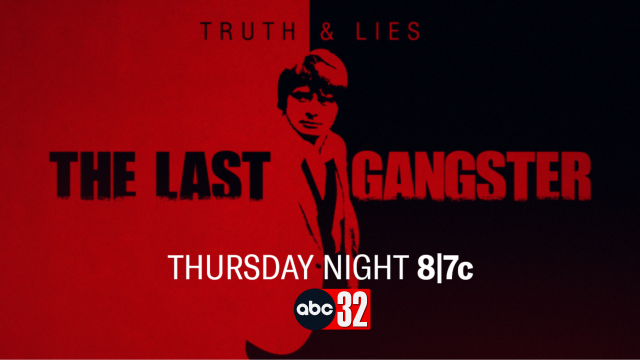
New two hour special on the Gambino family called The Last Gangster set to air this week


https://wpcdn.us-east-1.vip.tn-cloud.net/www.alabamanews.net/content/uploads/2022/01/d/o/abc2020-tlg-169-640x360.png

ABC News announced today the premiere of “Truth and Lies: The Last Gangster,” a two-hour event special on the infamous Gambino mob family, featuring a new interview with one of the most notorious hitmen in mafia history, Sammy “The Bull” Gravano. In a blockbuster interview, Gravano reveals secret rites and practices of the mafia and speaks candidly about the use of murder as an instrument of power and control. Gravano, a man who murdered 19 people, including his closest friend and his brother-in-law, was part of a violent brotherhood known as “Cosa Nostra.” For years he and John Gotti, the head of the Gambino family, controlled tremendous portions of New York City’s economy under a rule of fear and intimidation, and his loyalty to “The Family” came at a devastating cost. Ultimately, Gravano became a witness for the FBI, and his testimony brought down the mafia. Together with Gravano’s 1997 Diane Sawyer interview, the special features new interviews with Gravano’s son Gerard and daughter Karen; Curtis Sliwa; former mobsters John Gotti Jr., Larry Mazza, Michael Franzese and Anthony Ruggiano; Ruggiano’s daughter Toni Lee; companions of both Gravano and Gotti; daughters of Gravano’s victims; “Sopranos” producer and writer Terence Winter; and former FBI and NYPD officers who led the Gambino investigation. “Truth and Lies: The Last Gangster” premieres Thursday, Jan. 27 7PM, on your local ABC32. It can also be viewed the next day on demand and on Hulu.

https://www.alabamanews.net/2022/01/24/abc-news-presents-two-hour-primetime-event-on-the-infamous-gambino-mob-family/

Tuesday, January 4, 2022

Saturday, November 27, 2021

Sunday, November 7, 2021

Sunday, October 24, 2021

The FBI is loving all these new mafia podasts


To join the Mafia, one must take an oath of omertà, the code of silence that’s meant to keep information about business dealings within the family. Breaking it is a crime punishable by death, but, these days, a lot of mafiosi are speaking pretty freely. Take Salvatore (Sammy the Bull) Gravano, the Gambino family underboss in the late eighties, who was involved in at least nineteen murders during his tenure as John Gotti’s right-hand man. He now makes an honest living podcasting from the Phoenix suburbs, where he relocated after spending seventeen and a half years at a supermax prison. In an unhurried Bensonhurst accent, Gravano, now seventy-six years old, recounts his biggest hits (such as the one carried on the Mob boss Paul Castellano, Gotti’s predecessor), and his own infamous breach of omertà: the 1992 court testimony that sent Gotti to prison for life.

Back in New York City, another ex-hit man who worked for Gotti, John Alite, blends tales of his “six murders, more than eight shootings, and dozens of baseball battings” with inspirational advice for youth on his “Mafia Truths” podcast. Meanwhile, Jimmy Calandra, a notorious enforcer for the Bonanno family—reportedly the most brutal of the Five Families who controlled organized crime in New York—insults various “fat rat scumbags” and “stone-cold losers” on his YouTube series, “A Bath Avenue Story.” Those in search of cleaner fare might check out “The Sit Down with Michael Franzese,” an interview show in which the Colombo capo turned Orange County motivational speaker chats with celebrities and offers movie reviews and life-style tips to his viewers. (No. 1: “Fly under the radar.”)

The growing glut of Mob content, with its mix of graphic violence, relationship drama, and aspirational wealth, has carved out a natural niche for itself in our reality-TV and true-crime landscape. Gravano’s podcast, launched last year, boasts more than four hundred thousand subscribers; Franzese’s “Sit Downs” sometimes garner more than a million views each—roughly equal to the number of opening-weekend streams received by the “Many Saints of Newark” (which, according to Franzese, made Italian Americans “look like degenerates”). But the genre has drawn, alongside the usual true-crime obsessives, a more surprising set of devotees: F.B.I. agents, looking for a deeper understanding of some of the biggest cases of their careers.

“I spend hours and hours listening to these wise guys,” the retired special agent Bill Fleisher told me, the other day. Fleisher, who lives in New Jersey, spent most of the nineteen-seventies working on organized-crime squads in New York, Boston, and Detroit. “I could talk to them, I could polygraph them, I knew how they operated—but I could never get in their heads,” he said. “That’s why I like these podcasts. I’m beginning, like a shrink, to understand their thinking.”

Most of the mobsters sharing their stories today have cooperated with authorities in the past and now have legal immunity that allows them to speak openly about their crimes (those to which they have confessed, anyway). In the process of telling those stories, they often reveal answers to questions that have stumped law enforcement for years. “Instead of us going into prison and interviewing Sammy the Bull—how convenient, he starts his own podcast,” James R. Fitzgerald, a former F.B.I. profiler and another dedicated listener, said, from his house in Maryland. “If you watch and listen to enough of them, you can pick up on the trajectory of where they’re going, and maybe even solve some of those old crimes.”

The other afternoon, Fitzgerald, Fleisher, and I gathered on Zoom to watch a YouTube video of Sammy the Bull’s podcast “Our Thing,” a reference to the Cosa Nostra. Neither agent had met Gravano personally, but, having tracked his and his family’s dealings so closely, they both felt like they knew him as well as an old friend. In the clip’s opening animation, a bull charges through a concrete wall before Gravano appears, seated in a leather chair, in a recording studio outfitted with a fireplace, a neon bull glowing above the mantel. On the walls are framed portraits of the crime bosses Al Capone and Charles (Lucky) Luciano, and the actor James Cagney, known for his iconic portrayals of gangsters onscreen. Our host, small and wiry, is dressed in a white T-shirt and slacks.

“I’m glad to see Sammy in more traditional garb,” Fitzgerald said. “Back in the late eighties, early nineties, when I was dealing with these guys, the Adidas running suits or sweatsuits were the big uniform of the day.” (To be fair, in the video, Gravano was still wearing a pinky ring and gold chain.)

The podcast is focussed on one of the biggest investigations in F.B.I. history: the 1989 murder of an undercover D.E.A. agent by a low-level Mafia associate. “This is one of those pretty heavy stories that I really shouldn’t talk about,” Gravano begins. He starts by describing the associate: “There was a guy named Gus Farace. . . . Real tough guy, big guy, steroid freak, big ,huge fuckin’ body, arms, fairly good-lookin’ guy.” (“He was played by Tony Danza in the made-for-TV movie,” Fitzgerald pointed out.) Gravano explains that Farace had met the undercover D.E.A. agent, Everett Hatcher, on a Staten Island overpass to sell him some cocaine. But something unsettled Farace. “He started thinking this guy may have been an undercover, not cop, but an undercover informant,” Gravano says. “They must have had words in the car, and he shot and killed him.”

Farace went on the lam and the F.B.I. cracked down on every family in the Cosa Nostra, raiding their clubs and gambling rings, arresting parolees for any minor infraction, in an effort to extract information about Farace’s whereabouts. “Everyone in this game knew the rules had been changed,” Fitzgerald explained. “We don’t kill them. They don’t kill us.” Farace, who wasn’t even a made guy, had “violated rule No. 1,” so the Mafia “knew it was hard times ahead for them.”

According to Gravano, one day, the F.B.I. knocked on his door, and ordered him to track down Farace: “ ‘Sammy, we want you to tell John Gotti that we want this guy found, and we don’t care how.’ The way they said it,” Gravano continues, “I just had to ask the question: ‘Are you asking me to kill him?’ ”

“ ‘No, no, Sammy,’ ” the agent supposedly responded. “ ‘No, we’re not going there. We don’t give a fuck how he’s found.’ ”

Gravano didn’t buy it. (Or, maybe he didn’t want to buy it.) “There would be nothing better for me to do for the government than to kill somebody for them,” he tells his audience. “That would give me a license to do whatever the fuck I felt like doing.” He goes on, “They checked themselves right away. But that was the message.”

Fitzgerald interrupted: “We honestly didn’t want that,” he said. “We wanted to put this guy on trial, and maybe even to flip him and get information.”

“But it tells you how Sammy’s mind works,” Fleisher added. “As a wise guy, a lot of his orders, given and taken, are done by nods, innuendo, double-entendres.” If a boss describes a guy as “ ‘always smiling,’ that could be a message to go knock his teeth out.”

In any case, the two sides had certainly entered “a very strange situation,” Fitzgerald said. “The F.B.I. and the Mob are both looking for Gus, and who’s gonna get him first?” The Mob, it turned out. Nine months after the Hatcher murder, Farace was found, shot dead, in the streets. “The moral of the story is, this kid did not belong to us in the Mafia,” Gravano concludes. “If you like this story, press Like, subscribe.”

After the episode ended, I asked the agents what they would ask Sammy if they had the chance. Fitzgerald said he’d ask him why he flipped on Gotti: “You violated the most sacred code of all, omertà,” he said. “What did one F.B.I. agent say to you to convince you to give it all up?”

A few days later, I called Gravano up to ask him why he broke with omertà back in the day, and why he’s still spilling Mafia secrets now. “I want my children and grandchildren to know my truth—good, bad, and ugly,” he said. Plus, “it’s a good way to earn.” As for flipping on Gotti, “We were brothers,” he told me. “I killed for him. I rigged trials.” But when Gotti got caught on tape implicating Gravano in multiple murders, that was the end. Gotti told Sammy that he’d have to do the time so that Gotti could go free. “I walked from that meeting and said, ‘Fuck John, fuck the Mafia,’ and I quit.”

“The agents Frank [Spero] and Matty [Tricorico] who were assigned to me, they were always around me,” Gravano said. At Christmas, he would bring coffee and cookies to their car while they staked out his house. “I trusted them. I liked them.” So when he needed to talk, he turned to the agents, who were more than happy to listen. They still are.

https://www.newyorker.com/culture/culture-desk/why-the-fbi-loves-mob-podcasts

Tuesday, October 5, 2021

Former Underboss of the Gambino family linked to John Gotti dies in prison serving life sentence


 Former Gambino underboss Frank LoCascio.

A Gambino crime family underboss famed for professing his loyalty to John Gotti as they were convicted at a murder and racketeering trial has finished his life prison sentence.

Frank LoCascio, who was 89, died Friday at FMC Devens in Massachusetts, which houses federal prisoners with health issues.

“I am guilty of being a good friend of John Gotti,” the defiant underboss famously said in court in 1992 after he was found guilty of racketeering. “If there was more men like John Gotti, we would have a better country.”

“Frankie Loc” LoCascio and the Dapper Don were nabbed in 1991 and charged in a sprawling racketeering case in which they were caught on tape discussing criminal activity — including murder — in the apartment of an old widow who lived above Gotti’s Ravenite Social Club on Mulberry St. in Manhattan.

Gotti was convicted of murder and racketeering at the same trial as LoCascio. Gotti was nicknamed the Teflon Don for beating the rap in several criminal cases during the 1980s, but his conviction with LoCascio was upheld by the U.S. Supreme Court.

LoCascio’s daughter, Lisa LoCascio, told the Daily News that her father never complained during his 31 years in prison — and that he never snitched.

“That means something,” she said. “I won’t explain it to you.”

She said her dad was a favorite among the staff at Devens and that he called her last Monday to say his goodbyes to the family.

“He said the things you say to your daughter when you choose your daughter to be the last phone call you’re going to make,” LoCascio said.

She rushed to the Massachusetts prison and held her father in her arms singing him Frank Sinatra as he took his final breaths.

A made guy for 35 years when he was busted by the feds, LoCascio was a consummate gangster, and took his life sentence without testifying for the government. He was Gotti’s underboss from 1987 to his arrest in 1991.

LoCascio helped Gotti carry out the murder of Gambino family member Louis “Jelly Belly” DiBono in 1990, who was shot in the head with three .25-caliber bullets in his Cadillac in the parking garage of the twin towers.

Gotti wanted DiBono dead because the Gambino soldier once refused to come meet with him when he called.

“He didn’t do nothing else wrong,” Gotti said on the wiretap with LoCascio in the room. “He’s gonna get killed because he, he disobeyed coming.”

LoCascio also bribed an NYPD detective for confidential information, hatched an ultimately unsuccessful plan to kill someone the Gambino family thought might snitch, and obstructed the investigation into the 1985 murder of then-Gambino boss Paul Castellano.

While he remained silent on the tapes about the DiBono killing, prosecutors argued that his mere presence in the room when Gotti hatched the rubout plans made him him guilty, since his job as underboss was to advise Gotti and, where necessary, correct him.

Gotti and LoCascio’s fates were sealed by turncoat mobster Sammy “Bull” Gravano, who was initially indicted with them, but turned rat in the weeks leading up to the 1992 trial.

Fast forward 27 years, however, and Gravano changed his story, arguing that LoCascio had not wanted DiBono killed.

Gambino turncoat Gravano, who admitted to a role in 19 gangland killings, provided a declaration in November 2018 asserting LoCascio “had no role in the planning of, nor did he participate in any way in the murder.”

But Brooklyn Federal Court Judge Leo Glasser, who presided over the 1992 trial, would have none of it and rejected LoCascio’s late-in-life bid for freedom.

“LoCascio’s utter silence upon that stark pronouncement bespeaks a wordless assent,” wrote Glasser, affirming the conviction. “That wordless assent was to a death sentence on DiBono, not because he committed a crime but worse — only because he did not come in when called by John Gotti.”

Gotti died of throat cancer behind bars in 2002.

https://www.nydailynews.com/new-york/ny-gambino-underboss-frank-locascio-john-gotti-dead-20211005-2fddomao3fdfhnv2xsskbudb6m-story.html

Monday, July 19, 2021

Sunday, June 13, 2021

Imprisoned longtime Gambino mobster hopes letter from Sammy the Bull will clear him of murder and overturn his life sentence


https://www.silive.com/resizer/dS3EkXgJ64Nn0oGH5KpT7o63uPQ=/1280x0/smart/cloudfront-us-east-1.images.arcpublishing.com/advancelocal/FGUDLMEZC5BS5B6RI2ES2EL2R4.jpg

An octogenarian mob bigwig is pinning his hopes on an affidavit from notorious Mafia turncoat and one-time Graniteville resident Salvatore "Sammy the Bull" Gravano in a longshot bid to be sprung from prison.

One-time Gambino crime family underboss and acting consigliere Frank "Frankie Loc" LoCascio is serving a life sentence in the 1990 murder of wiseguy Louis DiBono.

DiBono was killed on the order of Gambino chief John Gotti for not reporting to meetings with the “Dapper Don” as told.

LoCascio maintains he had nothing to do with DiBono’s slaying, and that Gravano’s affidavit backs him up.

Gotti and LoCascio, now in his late 80s, were convicted at trial in Brooklyn federal court in 1992. Gotti died behind bars nearly two decades ago.

But LoCascio, who has been locked up for almost 30 years, recently got a ray of hope.

The U.S. Court of Appeals for the Second Circuit has agreed to consider whether the octogenarian is entitled to an evidentiary hearing to determine if he was wrongfully convicted.

Despite Gravano’s affidavit, a Brooklyn federal court judge had denied LoCascio’s motion for a hearing late last year.

“We are pleased the Second Circuit recognized that there are substantial issues in Mr. LoCascio’s case,” said his lawyer William W. Fick of the Boston-based firm, Fick & Marx. “We look forward to proceeding with the appeal and eventually convening a hearing where Mr. Gravano can testify.”

No date has been set.

A spokesman for Brooklyn federal prosecutors declined comment.

Gravano, whose testimony helped bring Gotti down, signed the affidavit in November 2018.

In it, he says he was never asked at trial whether LoCascio agreed with the decision to kill DiBono. Nor was he asked if LoCascio approved of the hit.

“Frank had no role in the planning of, nor did he participate in any way in the murder or conspiracy to murder Louis DiBono,” wrote Gravano. “… LoCascio’s role as a member of the administration did not require him to agree with the ‘boss’ in every situation. Clearly, Gotti, as the boss of the family, had the sole authority to make the decision to kill DiBono.”

In support, Gravano pointed to a Dec. 12, 1989 wiretapped conversation between LoCascio and Gotti.

LoCascio tried to calm Gotti down after the chief said he had decided to kill DiBono for disobeying him, Gravano said.

In fact, LoCascio predicted the victim would bring the boss $50,000 to amend things, according to Gravano.

“This conversation shows that Frank tried to save DiBono’s life, and he did not agree with nor approve the decision to kill DiBono,” Gravano wrote.

Shortly after that discussion, Gotti told Gravano he “strongly resented” LoCascio’s suggestion that he take the cash and spare DiBono’s life, said Gravano.

Gotti was so peeved he promoted Gravano to official underboss and demoted LoCascio to acting consigliere, Gravano wrote.

“Viewed in light of all the evidence, this declaration proves LoCascio innocent of the DiBono murder,” LoCascio’s lawyers wrote in their Appeals Court motion. “Gravano’s testimony that LoCascio played no role in the murder, did not want DiBono to be killed, made his view clear to Gotti, and did so at the expense of his own role in the organization, was likely to convince the jury that LoCascio was not involved in, and not guilty of, the murder.”

In previously denying LoCascio’s motion last November, Brooklyn federal court Judge I. Leo Glasser questioned the validity of Gravano’s statements.

Gravano, he noted, was not present during the intercepted conversation between Gotti and LoCascio.

Yet Gravano interpreted the meaning of LoCascio’s words without having heard his tone of voice or seeing his face, said the judge. Nor had he discussed the conversation with LoCascio.

“It is, remarkably, the reading of his mind or divine enlightenment some 30 years later, that ‘shows’ him what his words meant,” wrote Glasser.

“Frank LoCascio was not trying to save the life of Louie DiBono. He predicted that DiBono would try to save his own,” the judge said. “Throughout the (trial) transcript, one becomes aware that going against, disobeying, or disagreeing with Gotti is fraught with danger, and Gravano and LoCascio knew it.”

LoCascio’s “utter silence” on Gotti’s “stark pronouncement” to murder DiBono “bespeaks a wordless assent,” opined Glasser.

https://www.silive.com/crime-safety/2021/06/mob-bigwig-hopes-letter-from-sammy-the-bull-will-clear-him-of-1990-murder-life-sentence.html

Jailed Gambino soldier who plotted to kill turncoat Sammy the Bull with a land mine wants sentenced slashed


https://www.silive.com/resizer/lCoOxerSW37V4CP90us-oVHkMyk=/1280x0/smart/cloudfront-us-east-1.images.arcpublishing.com/advancelocal/JUI2O25YDZBMNPWOS6TS72ZM54.png

Former Travis resident and reputed Gambino organized crime family solider Thomas "Huck" Carbonaro has a long and violent criminal history.

Nearly two decades ago, Carbonaro was convicted of participating in a conspiracy to assassinate notorious mob turncoat Salvatore "Sammy the Bull" Gravano in Arizona in late 1999 and early 2000.

Carbonaro was also found guilty for his role in two other murder plots: The April 1998 slaying of New Springville resident Frank Hydell and the August 1990 killing of construction official and reputed Gambino solider Edward Garofalo.

Hydell was gunned down outside Scarlet’s, a former South Beach strip club.

Carbonaro, now 73, doesn’t dispute the seriousness of his crimes, which also includes a construction industry shakedown, his lawyer said in a recent letter to the court.

But he is a changed man.

One who deserves a shot at having his 70-year sentence reduced and spending his remaining years with his family.

“Mr. Carbonaro is no longer the man who committed his offenses of conviction,” wrote attorney Harlan Protass. “Rather, today, he is a simple convict doing his time, trying to improve himself and attempting to maintain relationships with his large, loving and ever-growing family.”

“He has put decades of distance between himself and his criminal conduct and decades of distance between himself and any individual associated with the ‘Gambino Crime Family’ who might induce him to engage in criminal conduct should he be released from prison,” Protass said. “Mr. Carbonaro is, simply put, ready to start a new chapter in his life.”

Carbonaro has already served 18 years behind bars.

Protass seeks to reduce the sentence to 25 years, or a period less than 70 years which the court finds “just, fair (and) appropriate.”

FEDS: NO BREAK

Citing Carbonaro’s troubling criminal past, Manhattan federal prosecutors say he doesn’t deserve a break.

“The defendant and his associates were part of the notorious Gambino crime family and conspired to murder individuals they suspected were cooperating with the government and threatening their illegal enterprise,” wrote Assistant U.S. Attorney David J. Robles in opposition. “These offenses thus could not have been more harmful to the public and our justice system.”

“Given the multiple lives taken at the hands of the defendant and his co-conspirators, as well as the defendant’s involvement in loan-sharking and extortions on behalf of the Gambino crime family, the 70-year sentence imposed by the court was fair and should remain undisturbed,” Robles said.

No date has been set for Manhattan federal court Judge Colleen McMahon to rule on Carbonaro’s motion.

In December 2004, Carbonaro was convicted in Manhattan federal court of racketeering, racketeering conspiracy, extortion and conspiracy to commit murder.

He was sentenced to three consecutive prison terms of 20 years each, plus a consecutive term of 10 years.

Carbonaro appealed his convictions and sentence and was denied.

His projected release date is in March of 2063. Which effectively makes his prison term a life sentence, said Protass.

While behind bars, Carbonaro has been a model prisoner, the attorney wrote the court.

That, coupled with Carbonaro’s age, “serious” health issues and scant likelihood of recidivism make him an ideal candidate for a sentence reduction, reasoned Protass.

“Despite having no realistic hope of release before the end of his life, Mr. Carbonaro has sought to rehabilitate himself to the fullest extent possible, as evidenced by his accomplishments behind bars and his meritorious prison record, which includes no disciplinary violations whatsoever,” Protass wrote.

Carbonaro has earned his GED and “several valued certificates,” said the lawyer.

More importantly, he is remorseful for his actions, Protass wrote.

“Mr. Carbonaro makes no excuses for his criminal conduct or former criminal associations. He does not seek to justify, diminish or detract from the seriousness of the offenses,” said the lawyer. “And he unequivocally accepts responsibility for his criminal conduct, including the conspiracies that resulted in the tragic deaths of Edward Garofalo and Frank Hydell.”

DISPROPORTIONATE SENTENCE?

Another reason for a reduced sentence: Carbonaro’s 70-year prison term is disproportionate to the sentences received by his co-defendants, maintained Protass.

Peter Gotti, the acting Gambino crime boss, was sentenced to 25 years. Edward Garafola, a cousin of the victim, Edward Garofalo, got 30 years.

Both men died before finishing their terms.

“Unlike Mr. Carbonaro, both Mr. Gotti and Mr. Garafola each had at least a chance of surviving their prison sentences (even if they did not),” wrote Protass. “Realistically, Mr. Carbonaro will not survive his current 70-year sentence.”

Gotti, 81, died in prison earlier this year.

He was convicted in 2004 for putting a $70,000 bounty on Gravano’s head.

A onetime Graniteville resident, Gravano’s testimony had helped send Gotti’s brother, mob chief John Gotti Sr., to prison.

Prosecutors at the time said the men plotted to kill Gravano in Arizona with a homemade land mine or a hunting rifle as payback for turning against the family.

Gravano, however, was busted on drug charges before the hit could be carried out.

Prosecutors contend Carbonaro has failed to demonstrate “extraordinary and compelling reasons” warranting compassionate release.

Regarding his health issues, prosecutors maintain he has received and will continue to receive appropriate treatment in prison.

And the scope of his crimes nullifies his positive prison behavior, contend prosecutors.

“While the government commends the efforts the defendant has taken to rehabilitate himself and recognizes that he has the love and support of his family, that does not negate his lengthy criminal history prior to conspiring to commit multiple murders or the seriousness of offenses that he committed on behalf of one of the most vicious and notorious crime organizations in New York,” wrote prosecutors.

“Under these circumstances, the court should require the defendant to serve the remainder of his sentence,” prosecutors said.

https://www.silive.com/crime-safety/2021/05/reputed-gambino-soldier-who-plotted-to-kill-sammy-the-bull-with-land-mine-wants-70-year-sentence-slashed-no-way-say-feds.html

Monday, March 15, 2021

Wednesday, March 10, 2021