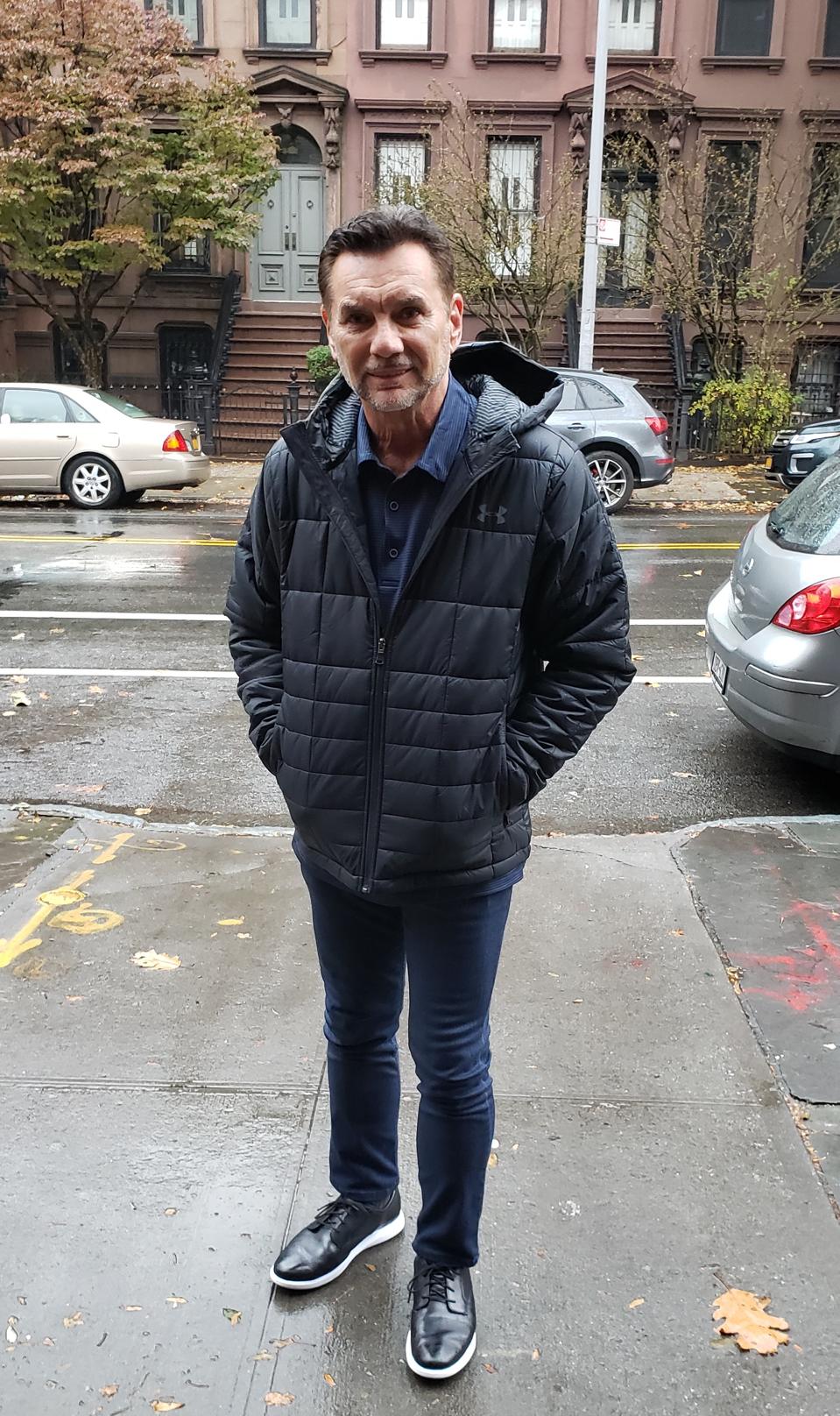
On a chilly, shades-of-gray morning in November, I drove to JFK
Airport to pick up Michael Franzese, a former capo of the Colombo mob
— one of the famed five New York mafia families. (His father, former
underboss and enforcer John “Sonny” Franzese, who died last month at age
103, was one of the most feared mob leaders ever to walk the city’s
streets.)
As I popped the trunk
of my rental car for his
suitcase, I smiled as my mind unexpectedly replayed the iconic opening
scene of “Goodfellas.” You know, the one where Lucchese family associate
Henry Hill (portrayed by Ray Liotta) opened
his trunk to discover a gasping gangster —
mezza morta (half-dead,
as in overcooked pasta) — wrapped in bloody tablecloths and begging for
his life. Offended by that inconvenience, fellow Lucchese associate
Tommy (Joe Pesci) plunged a large kitchen knife into the guy’s chest
four times to try and finish the job.
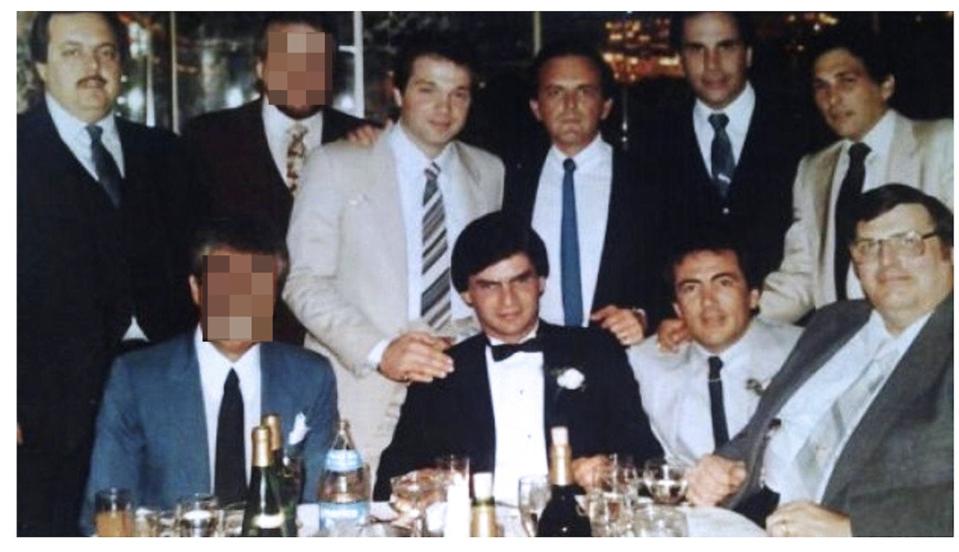
So naturally I wondered what Franzese might do if one of his former
enemies had magically appeared next to my spare tire. It was not an
entirely unhinged flight of imagination, given that Michael himself was
named and portrayed in an early scene in the movie.
Needless to say, however, I resisted talking about my trunk
during our drive into his native Brooklyn, headquarters of the Colombo
family’s central command. We’d only just met and I didn’t know if he’d
find it funny. “I
would have,” he said weeks later, from his home in Orange County, California. “I’m a good sport when it comes to that.”
Michael can play along because he quit La Cosa Nostra (”this thing of
ours”) 25 years ago, the first time a high-ranking member simply walked
away from his blood oath — and lived to tell about it. (His father
approved a hit on him at the time.) Described by feds in the 1980s as
“The Yuppie Don” (a nickname he hated) and one of the Italian mafia’s
highest earners since Al Capone, Franzese (pronounced FRANCE-seize) has
long been a devout Christian with a nonprofit ministry who has given
more than 100 talks to juvenile delinquents and inmates in five
countries — urging them to stay out of gangs.
He has also parlayed his past into a brand — complete with books, a
documentary, and motivational speeches to businesses, schools,
churches. “Cook the pasta, not the books,” he instructed budding
entrepreneurs in a hardback he wrote in 2009 called, “I’ll Make You An
Offer You Can’t Refuse: Insider Business Tips From a Former Mob Boss.”
He expects to announce a podcast and TV series soon, and he’ll be
hosting a stage musical, titled “A Mob Story,”
that is scheduled to open in late May on the Vegas Strip. Moreover, he
recently formed Wiseguy Entertainment, in a partnership with Australian
entrepreneur Tibor Vertes, who once founded a gaming and entertainment
company that traded on NASDAQ.
At age 68, Franzese is now taking his remarkable journey to the next
logical step — cooking up a tomato sauce that ought to shame the
Domino’s and Pizza Huts of the world into pleading with this ex-capo for
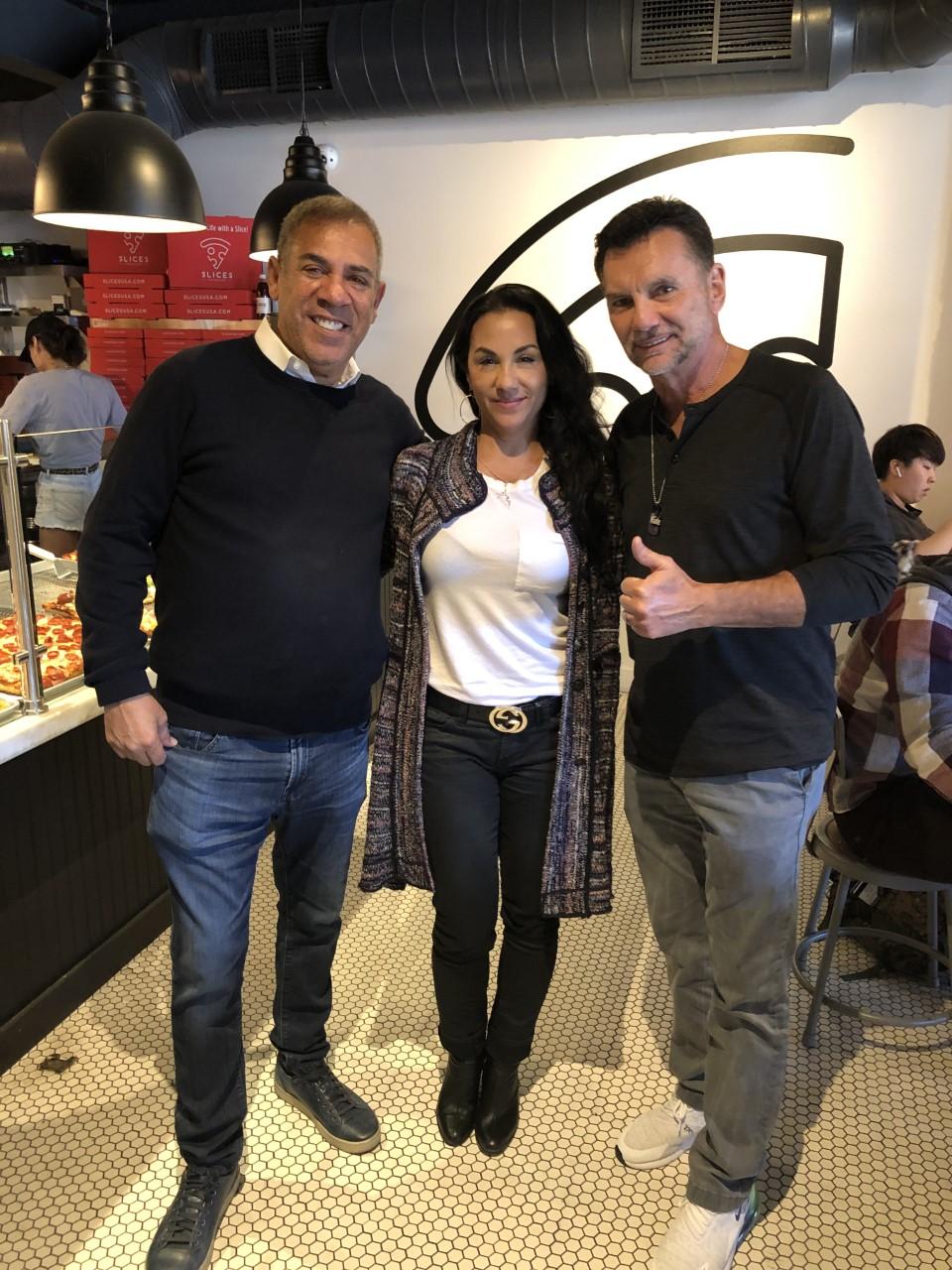
mercy. He’s teamed with Tony Riviera, a 62-year-old former Colombo
associate who quit working for the family in 1989, and built a career in
Seattle and other places on the West Coast as a renowned restauranteur
(and also speaks to audiences of troubled kids.) They’ve launched a
high-end pizza franchise called “Slices” that
they believe combines the latest food science and efficiencies with the
best ingredients money can buy — to create killer pies that retail for
only $4 to $5 a slice.
In December, they were approved for SBA loans, which they hope franchisees, including some who want to turn their
own
lives around, can utilize to open pizzerias for as little as $125,000
to $200,000 (far cheaper than most of the competition), with just 20%
down. They believe that their system will enable franchisees to be far
more profitable than others in the pizza universe, so long as they
follow the system they’ve designed, don’t cut corners, and don’t do
anything unethical.
(Riviera also wants to apply the efficiencies behind Slices to create
a chain of nonprofit soup kitchens that would also train the homeless
to be cooks in order to help them enter the workforce.)
The first company-owned pizzeria opened in San Francisco a year ago
and is typically packed. Leases were signed last week for two more — a
combo store/franchisee training center in Los Angeles, and a store in
Newport Beach that will be run by Franzese’s 30-year-old son, Michael
Jr., a culinary chef who will also serve as a regional operation
director. The first Slices franchise, to open in San Mateo (south of San
Francisco), was sold in January. “The absolutely hardest thing is to
sell your first, because nobody wants to take the plunge,” says Riviera,
who previously ran two large food franchise chains. “Lemme tell you,
this location and operator — this store will be
huge.”
Yesterday, Franzese was in New York seeing potential investors for
next-stage financing for Slices, but wouldn’t spill any beans about who
they were, or at least let me bug the meeting. Riviera says he’s
reviewing 30 more applications, and the boys have big ambitions: 500
franchises in five years and an IPO. Ultimately, they want a trail of
stores that cross the country to New York, where —
generally
speaking — the quality of pizza seems to have deteriorated over the
decades. In part that’s due to rising rents, which too often compel
pizzerias to lower costs with lower-quality ingredients.
It wasn’t always that way. In 1984, I flew to Ann Arbor, headquarters of Domino’s, to write a profile for
Forbes
magazine of Tom Monaghan, a onetime homeless kid whose franchise chain
was the fastest-growing in the country. I suggested to him that his
Domino’s pies might not make it in a market like New York, where great
pizza was as ubiquitous as the Italians who were creating it. But he
marched right in, proving skeptics wrong, and perhaps even helped lower
the city’s standards with his blizzard of outlets. (In 2009, the
president of the chain’s U.S. operations woke up to say what most New
Yorkers knew decades before: “The crust tastes like cardboard. The sauce
tastes like ketchup… This is an imitation of pizza.”)
Slices doesn’t have that problem. “Wiseguys know good food,” Michael
wrote in a text message, demonstrating how he plans to use his mobster
past to market the franchise chain. “And wiseguys from New York
certainly know good pizza.”
The message included a winking face emoji.
Well… holy mozzarella? With RICO prosecutions having all-but-obliterated the Italian mafia, is
this where
we are in 2020? — a caporegime who was being groomed at one point to be
the godfather today enjoys sending happy faces – sometimes
super-endearing ones that blow a tiny red-hearted kiss. (Don’t get
excited;
not the Michael Corleone-type kiss.) At least he
retains his deep voice and Brooklyn dialect, but, disappointing to me,
he no longer uses any swear words.
Can this thing of theirs actually take off? After hearing a lot about
their formula and sampling the merchandise, and given Franzese’s
lifelong acumen for making big dough (not to mention having the energy
level of a man half his age), you don’t want to place any street bets
against these guys. Also key to the recipe: Riviera’s experience
developing restaurant concepts — he’s owned and operated over 100 joints
through the decades, from a 58-store pizza chain (40 of which were
franchises), to trendy food halls, steakhouses, even Canada’s first
burrito chain. “With Slices, I have a great concept that I think the
world’s gonna love,” he says.
Pizza, of course, is a crowded marketplace dominated at the top by
the Domino’s, Pizza Huts, Little Caesars and Papa John’s of the world –
known as QSRs (Quick Service Restaurants) — that seem devoted to a
lifetime of committing crimes against flour, cheese and sauce. In terms
of bad-guy branding, the 465-store faux-named Godfather’s Pizza chain,
marketed as “A Pizza You Can’t Refuse” (yeah right) has its roots in,
ummmm,
Nebraska? Its felony: Employing enough cheese to
choke a real gangster to death. On the other hand, Americans digest
about 100 acres of pizza per day (in many cases,
indigest), and
there’s always room for more rivalry. Case in point: The successful
Blaze and MOD Pizza chains, in what is known as the “fine casual”
sector, designed with atmospheres that customers are expected to hang
around in.
But it’s the QSR sector’s in-and-out turf that Slices’ owners want to
poach on, and they’ve wisely kept the name generic so as not to
overkill. What Riviera did was take years “to develop something that was
painless to today’s entrepreneur and business owner,” he explains,
“combining state-of-the-art food technology and food science to compete
on the world stage — and at the same time minimize the amount of labor
needed to maximize profitability.” He traveled to seven cities in Italy,
he says, to sample the best pizzerias and locate the best available
ingredients and equipment, capped by trips to France and Spain to study
the best bread-making techniques in those lands. “My father was a master
baker in Brooklyn, so I understood the bread-baking process better and
different techniques better than most people.”
Tony’s first job in food service was as a pizzamaker at Armando’s,
one of the oldest pizzerias in Flatbush — at age 11. Unfortunately, his
life took a bad turn around that same time period. Riviera and Franzese
served in different Colombo family crews, both of which reported to
Michael’s father, Sonny. Riviera was known as “Tony Sticks,” because he
worked as the stickman (the one who calls out the dice rolls in craps
games and then reels them back to the shooter) at mob-run illegal
gambling parlors. He was also involved in what became known as the
“payola scandal” in the record industry, in which radio DJs were paid
cash bribes to play certain songs.
But unlike Michael, Tony never became a made member.
And,
unlike his old friend, he doesn’t like to talk about his life in the
mob. “Let Mikey be the gangster, I’ll be the pizza man,” he says with a
laugh. But he feels compelled to lecture and mentor kids in various
institutions. “I tell them about the gang life in Brooklyn, and get them
to understand that the life is not as glorious as you may think,” says
Tony. “And that you can’t always be a victim, that people will turn on
you on a dime, and if you spend half the time trying to live your life
straight versus choosing a life of crime, it will be easier.”
In 1995, he created a pizza franchise he named Tony Maroni’s (after a
childhood pre-mob nickname), grew it to 58 stores, most of which were
franchises, and announced plans to have 500 within seven years.
Unfortunately, that didn’t come to pass. In 1999, he was preparing to
sell 50% of it for $70 million to the now-defunct Blockbusters, whose
execs wanted to sell his pizza in their video-rental stores. But the
deal went into a three-year period of limbo when their parent, Viacom,
decided to try and spin off Blockbuster into a separate public
company. Preparing for a rollout that never came, and because he was
tied to a ‘no-shop’ clause (which prevented him from selling to anyone
else — “Hollywood Video wanted to buy us for $100 million”), Tony ran
out of money and filed for Chapter 11. "Whether it's Tony Maroni or
Tony Baloney," he told
Inc. magazine at the time, “Tony Riviera's pizza will be in stores on a national basis."
As for today’s Slices, how did he and Franzese team up? They were
friends in their Brooklyn days, and saw each other from time to time
over the decades. They got closer in 2014, when Riviera hosted a party
at one of his LA restaurants for the premiere of “God the Father,” a
docu about Franzese’s spiritual transformation. Two years ago, Riviera
invited Franzese and his wife Cammy to San Francisco to taste an early
version of a Slices pie. As Michael recalls it, “I said, “Tony, look
bro, I’m gonna be perfectly honest with you because I know good pizza
and if it doesn’t cut it, it doesn’t cut it.” He and Cammy took a few
bites. “Okay, I’m
in,” he said.
In terms of quality, Slices surpasses the old Tony Maroni’s in its
ingredients. “We use red spring flour that is made in Naples, and the
dough we make is a very wet high-hydration recipe that is fermented for
72 to 96 hours, using very minimal yeast,” Tony says. “We bring that
flour to life, and that creates tremendous air pockets. We like to say
we are the Air Jordan of pizza — it’s that light. But I drove my cooks
crazy when we first started to develop. I brought in several pallets of
different flour from all over the world — at 65 bags per pallet. And we
probably made and threw out close to 1,000 of those bags before I
settled on a recipe.”
There’s more: He imports his tomatoes from Campania, “all
hand-selected from the crops we see coming in and processed according to
our specifications. Our olive oil is from Sicily. We use black steel
pans imported from Rome and the pizza is baked in them at high
temperatures. Our ovens, which are run by computers, are handmade in
Venice. We call it
cento per cento Italia – 100% Italian.”
Except for the mozzarella. That comes from Grande Cheese of
Wisconsin, an enterprise that has historic links with numerous mafia
figures, including the Profaci organization (which evolved into the
Colombo family.) But before you come unglued and scurry for your nearest
Domino’s, the Grande Cheese enterprise has been clean for decades and
is considered the gold standard for American pizzerias.
On the labor part of Riviera’s concept, he maintains that his
franchisees can operate successfully with three employees (and maybe a
fourth available as a backup if needed), keeping labor costs to 20% of
revenue. Many fast food franchisees hover around 30%. “You’ve been to
Eataly [a 40-store chain of Italian-style food halls],” he says. “See
how many people are running around like chickens without heads? So I
thought if I could create something that an operator can run with two to
four people total, this could change the pizza industry. And that’s
what I’ve done successfully.”
How is that even possible? “One at the register, two in the kitchen.
Once the rush comes, one employee comes out of the kitchen to ‘plate
up’ the slices. Technology allows us to do a tremendous amount of pizza
that all come out perfect in a very simplified way. It’s just painless.
We call it idiot-proof.” You mean you don’t have to be Italian? “You
don’t even have to be
smart. Any idiot can make it.”
To prove the concept, Riviera says he gave away flyers for free pizza
before the opening of the San Francisco store, without telling his
staff. “I flooded the gates. I gave away 1,000 pizzas in one day, just
to put tremendous pressure on my kitchen and the concept to see if I was
right. And we did it with three people. And it ran really well with
very little adjustments at all, except to have more product ready to go.
Did it a month later again unannounced, and it came out flawlessly.”
He blind-tastes everything, he adds. “I’m literally blindfolded and
my staff knows they have to feed me — whether I’m tasting an olive or a
tomato. They’ll try and trick me, and I’ll pick out what I believe is
best and I’ll reverse it and blind-test
them.”
So the trick is to beat and torture the crew? Got it. “In fact, they
were all excited as to ‘Hey, this is great.’ These people are very loyal
to me, and I said ‘Look, I believe I could make all you guys pretty
wealthy.’ Customers walk out saying, ‘This is the best pizza I’ve ever
had in my life.’ We also sell meatballs [$9 an order], and everyone just
walks out with their jaws dropping. It’s a meatball recipe I’ve worked
on for well over 40 years.”
At one point, Tony dropped his guard and named most of the
ingredients he uses in those meatballs, but when I phoned him to
fact-check, he requested I not print them all. (Witness intimidation, to
be sure. After all, he was an amateur boxer in his Brooklyn
days.) “Just say four meats…”
So I guess no one gets to walk into the kitchen who doesn’t belong there? “They
do, they just don’t get to walk out.”
I phoned Michael right away. “Tony talked with me about the food and
the operation. Obviously some secrets he’s not going to tell me.”
“Mmm, hmm. You know I’m sworn to secrecy on that, too, right?” (Oh,
great. He quits the mob, reveals a ton of secrets about ‘the life,’ but
now he’s serving up o
mertà on the menu.)
“Journalists have ways of making guys like you talk.”
“Okay.”
“Are you afraid?”
“A little bit, yeah. I’m shaking.”
The men shipped me two frozen pies and a package of Sicilian-style meatballs. “
Don’t put it in the microwave,” they
both warned (again with the intimidation), with Tony explaining that
the excessive humidity would all but murder the crust. “It’s the worst
thing you can do to bread.”
The jury verdict? (First, a full disclosure: These guys don’t scare
me, so my review is 100% reliable.) The Slices pizza was among the best
that both my wife and I have ever eaten — certainly among our Top Five.
And that makes me think that if we’d wolfed it down fresh in one of
their joints —not after being iced and transported from Frisco to New
York — we might give it the Gold. We’ll let you know for sure when we
visit a Slices store out west.
And the meatballs?
Easily the best meatballs that we ever had, hands down, regardless of having to defrost them first.
“
See!” said Michael. “Listen, one thing I gotta tell you
about mob guys, we know good food, and especially good Italian
food. Everything we did, we ate afterwards. You know, the night I got
made in 1975, it was at El Doro, Anthony Colombo’s catering hall in
Brooklyn. And what happens? — we finish up, six of us took the oath, and
after we were done, they had a whole banquet in the next room. So after
everything we do, we go and
eat. That’s just how it goes.”
Not long after taking that blood oath, Franzese built up so many
businesses that in 1986 he was the youngest mobster (age 35) on a
Fortune magazine
list of the “50 Most Wealthy and Powerful Mafia Bosses” — in what the
editors estimated was a $50-billion-a-year crime business. (While he
wasn’t actually “
the boss,” he had a crew of hundreds of soldiers and associates who reported to him.)
His most lucrative enterprise was a gasoline bootlegging scam that
defrauded the federal government out of gasoline taxes — by utilizing a
daisy chain of Panamanian shell companies. At its height, he estimates
that he and his partners, which included Russian mobsters, were selling
500 million gallons of fuel a month, and that he was personally
pocketing up to $8 million
a week.
He had plenty more going on, as well — car dealerships, nightclubs, a
contractor company, a Lear jet and helicopter, movie production
companies, insurance frauds, a loanshark operation, a sports agency — so
much, in fact, that the feds set up a Michael Franzese Task Force. In
the end, his rap sheet included 17 arrests, five criminal trials, and
eight years in prisons.
Did the Colombo family own pizza parlors? (Historically, pizzerias
were popular enterprises for mobsters, given that they were cash
businesses.) “Not really,” says Franzese, “but look, you lend a guy some
money, he owns a pizza joint, he doesn’t pay, and you own a piece of
the place. That’s how it went down. Look, I lent money to people who had
interests in restaurants so maybe as a result of that I had a little
piece of the restaurant — that’s just how we acquired things sometimes.”
And you provided protection to them?
“Of course.”
Who’s going to provide protection to Slices,” I joke. “That’s a good
question,” he says, not missing an attempt by a reporter at humor. “Oh
boy, I’ll have to wear a different hat and protect myself at that
point.” He recalls personally having a stake in only one pizzeria during
his mob days that he named Sonny’s Pizza in honor of his dad. It was
profitable.
Sonny was the oldest prisoner in the federal system until he was let
out at 100 simply because of his age. As for Michael, despite massive
pressure from the feds, he refused to rat on anybody in order to reduce
his own prison time. Nonetheless, many of his relatives disowned him,
and his father approved a family hit on him, just for having quit. “My
dad and I did repair our relationship,” he says. “I never loved him any
less nor did he love me any less. Of course it was a little different in
that, although I don’t consider myself a member of the life any longer,
my dad said my oath was forever. So I said, ‘Okay, pop!’ We had a
special, silent bond between us. Very personal. Our love was strong
until the day he passed. Of that I am certain!”
Our conversations at one point drifted (of course) to “Goodfellas,”
which Franzese praises for authenticity, with at least one exception
when it comes to food: The scene where the mobsters are in prison
drinking good scotch, while cooking up an elaborate meal of steak, pasta
and freshly delivered lobsters — and lounging around in what looks like
a spacious private apartment that was free of guards. “That’s not
realistic at all,” Michael laughs. “I spent eight years in prisons. We
sometimes ate a little better than the rest of the inmates because we
had guys in the kitchen and we knew how to get around some of the guards
— or let some of the guards eat with us every once in awhile — but I’ve
never seen
anything like that scene.”
Among those in that absurd Hollywood dining scene was the
fictionalized Henry Hill. But here’s something the movie didn’t include:
In a prison yard in 1987, recalls Franzese, he spotted the real Hill,
who was so unhinged by the experience that he demanded to be put in
solitary. “I’m not gonna touch that guy,” Michael says he told the
prison’s chief lieutenant, Henry Navarra, after he was called into his
office. “He’s got nothing on me. He’s not worth killing.”
But Hill, who at that point in his life was suffering from extreme
paranoia — with ample reason, having ratted out dozens of fellow
Lucchese mobsters — was transferred within the week to a different
facility. (
Forbes magazine godfather Randall Lane experienced
that paranoia firsthand, when he interviewed Hill many times in the
early aughts, which mafia mavens can read about in his book “The Zeroes:
My Misadventures in the Decade Wall Street Went Insane.” Lane had
co-founded a true crime magazine and recruited Hill to be his mafia
correspondent for a cheapo $3,000 per column —
my, how the mighty had fallen. Unfortunately, although Hill signed on, he kept losing his mind and Lane ended up whacking him.)
And “Sopranos” — what about that TV series? Critiques Franzese: “You
can’t argue with success, people loved it, so I have to go along and say
it was great. I’ll tell you what was wrong: If a mob boss was ever
visiting a psychiatrist, he’d be in the trunk of his car by the end of
the week
along with the psychiatrist.”
During our drive into Brooklyn a few months ago, Franzese said that
the Greenpoint section, where he lived as a kid, has changed so much
that it doesn’t feel like it was ever home. “It used to be all Italians.
We owned the neighborhood. Now it’s like the League of Nations. I had
20 aunts and uncles, all on my dad’s side, and dozens of cousins. My
grandfather opened a corner bakery in Greenpoint when he came here from
Naples in the early 1900s.”
Michael plans to open a Slices in Greenpoint one day and “bring the
Franzese name back to the town we originally settled in. My father would
like that.”
https://www.forbes.com/sites/richardbehar/2020/03/13/wiseguys-know-pizza-two-former-colombo-mobsters-role-models-today-launching-franchise-stores-the-secret-sauce-science/#7115ce9a5c55


