Updated news on the Gambino, Genovese, Bonanno, Lucchese and Colombo Organized Crime Families of New York City.

Saturday, November 24, 2012

RICO's Godfather believes the Mafia most likely killed JFK
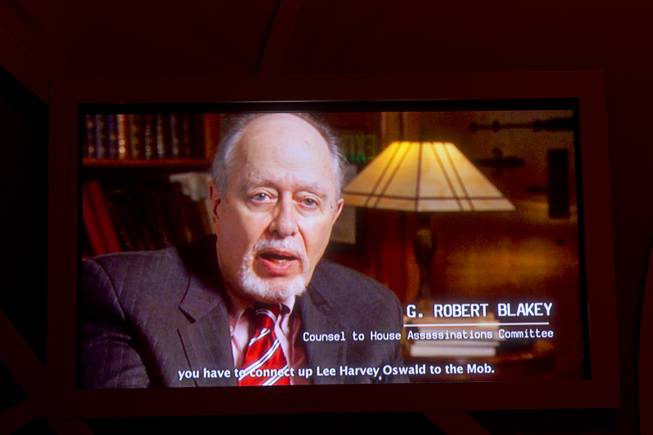

Image
Forty-nine years ago today, on Nov. 22, 1963, President John F. Kennedy was assassinated in Dallas’ Dealey Plaza.
The assassination and subsequent slaying of shooter Lee Harvey Oswald shocked the country. In the five decades since, the assassination continues to capture the imagination of authors, filmmakers and the public. It has sparked hundreds of conspiracy theories and studies into who — if not Oswald — was behind Kennedy’s slaying.
Robert Blakey, an attorney who served in the Justice Department in the 1960s and worked on drafting the Racketeer Influenced and Corrupt Organizations act, served on the House Select Committee on Assassinations that was established in 1976 to investigate the assassinations of both Kennedy and Martin Luther King Jr.
Unlike the earlier Warren Commission, which found Oswald acted alone, the House committee concluded its two-year investigation with a report stating Kennedy’s assassination was likely the result of a conspiracy.
Much of the evidence tied to the report was sealed from the public for 50 years. The committee specifically noted that it did not believe the conspiracy was orchestrated by the Soviet Union, Cuba, an organized crime group or any anti-Fidel Castro group but that the involvement of individual members of any of those groups could not be ruled out.
The committee consisted of 13 congressmen; Blakey served as its chief counsel and staff director from 1977 to 1979. Blakey helped draft the President John F. Kennedy Assassination Records Collection Act of 1992 and later wrote a book about the assassination, “The Plot to Kill the President.”
Blakey, in Las Vegas on Nov. 13 for a lecture at the Mob Museum, sat down with the Sun for an interview about his knowledge of the assassination.
One of the things the House select committee did was review the investigations conducted at the time, including by the FBI, CIA and, later, the Warren Commission. What stuck out to you?
First of all it was not a (federal) crime at that time to shoot the president, except for it being murder. So the FBI had to have a predicate in order to do an investigation. (One of the) bullets hit the car, and that’s destruction of government property. So, the whole Kennedy investigation (by the FBI) was premised on the ... destruction of government property, but that meant that the people who (oversaw) it in the bureau were from the property desk, not organized crime, and not the security people. The organized crime people were in a position to look into it, and they were never asked. They were never tasked with the investigation, and I couldn’t believe it.
You worked on the legislation that allowed for electronic surveillance, which eventually led to federal wiretaps on suspected members of organized crime. What did you learn about the connections between politics and organized crime?
One of the taps was set up in the Westside Democratic Club in Chicago, and they heard the whole story of what was actually going on in a phone conversation that’s really interesting. It’s a conversation between (organized crime boss) Sam Giancana and the mob there and Roland Libonati, a congressman. They are discussing how many votes Libonati should hit in the next election, how much he should win by.
So Libonati says: ‘Well I want it to look a little better than that, I want it to look like a close race.”
What were your thoughts about the Kennedy assassination before you started work on the committee?
A lot of people working on investigating the assassination spent a lot of their time looking for a conspiracy. When I started work on the assassinations committee, I did not think the mob did it. I thought it would be too high of a risk factor for them, and I knew (FBI Director J. Edgar) Hoover had electronic surveillance on them.
I said to myself: ‘I’ll be a hero to the mob. I’ll prove they didn’t do it by getting all this surveillance.’
So I got, I think, (information from) six months before and eight months after the (assassination), and the next thing you know they start talking about whacking the president.
What were some of the more interesting things you heard?
There is one conversation in Philadelphia where assassination is mentioned and (Philadelphia organized crime boss) Angelo Bruno says: ‘No, no. We don’t do that.’ And he tells the old Sicilian story about what happens when you take a prince out. You get his son, and the son is worse than the prince. So you live with what we have, and that was the message.
That changed over time. It was very clear they were talking about it. They were thinking about it and they were very angry about it, and particularly they were angry with Kennedy and the reason they were angry with Kennedy is twofold. Giancana had gotten him votes in Chicago, and then what did he do? He put Bobby Kennedy in (as attorney general) and sicced him on them. That’s not good.
And, there were romantic relationships between John Kennedy … well there were romantic relationships between Kennedy and everybody.
There were two John Kennedys. There was the public John Kennedy, which everybody admires, and then there is the guy who is sick when it comes to women. But he had a relationship with a woman who was … also associated with Sam Giancana.
What conclusions did you come to after it was all over?
I think the mob set Oswald up as a patsy. It’s not that I think (Oswald) didn’t shoot (Kennedy), but that I think he was set up so (investigators) would focus on the Cuban connections (and not the mob). Did the mob do it? I don’t know for sure, but it explains more of the evidence than anything else.
You were a part of the Justice Department when Robert Kennedy was attorney general and vigorously went after organized crime. What happened after John F. Kennedy’s death?
Whether the mob killed Kennedy or not I couldn’t tell you, but they were the one element of society that profited the most by the assassination, because the (federal government’s) organized crime program basically collapsed.

http://www.lasvegassun.com/news/2012/nov/22/49-years-have-passed-kennedy-assassination-still/

Rizzuto called to testify at corruption inquiry


Vito Rizzuto. (PABLO DURANT/QMI Agency)
Vito Rizzuto, the former head of one of Montreal's main mafia families, has been subpoenaed to appear before Quebec's public inquiry on corruption in the construction industry.
Quebec police stopped the former don - who was wearing a bullet-proof vest - on the street earlier this week, QMI Agency has learned. Police questioned Rizzuto about recent gang-style murders in the Montreal area and a bailiff handed Rizzuto the summons, according to sources.
It was the first time since his return from a prison stint in the U.S. that members of a Quebec police force saw Rizzuto.
His appearance before the construction inquiry will be highly anticipated. His name has surfaced many times during the testimony of several witnesses.
Former Quebec construction entrepreneur, Lino Zambito, testified that 2.5% of the value of the excavation contracts he received from the city of Montreal went directly to the Rizzuto crime family. A retired city engineer also testified that he went on a golfing trip with the former don and helped him get regular access to City Hall.
A leading mafia figure being forced to testify at a Quebec inquiry is not a novel occurrence. In the mid 70s, mafia heads Paolo Violi and Vic Controni were forced to testify. They both refused and as a consequence, were jailed for a year.
Earlier this week, a former associate of Rizzuto's, Raynald Desjardins, who is awaiting trial for murder, was also told by the presiding judge of the commission that he had to testify.

http://www.strathmorestandard.com/2012/11/24/vito-rizzuto-called-to-testify-at-quebecs-corruption-inquiry

Friday, November 23, 2012

New England mob associate last defendant to be sentenced


Next month the final of nine mobsters or associates charged in a sweeping crackdown on organized crime will be sentenced, and just over a year later another defendant will once again taste freedom.
Theodore Cardillo, an admitted mob associate who helped facilitate the shakedown of area strip clubs will be sentenced on December 11. He will likely be the only defendant not to see any prison time as court documents show the Rhode Island U.S. Attorney's office is recommending six months in home confinement followed by just over four years of probation.
Investigators say those protection payments went to the former New England mob boss Luigi 'Baby Shacks' Manocchio, who pleaded guilty to racketeering earlier this year. He is currently at a prison in North Carolina and is scheduled to be released in November 2015.
The first defendant to possibly be released from prison is Thomas Iafrate, a mob associate who was a bookkeeper at the Cadillac Lounge strip club. Prosecutors say he acted as a runner for the protection payments. He was the first to plead guilty and will also face probation when he is released.
Next to possibly see freedom is Raymond "Scarface" Jenkins in May 2014, according to the Federal Bureau of Prisons website. Jenkins was accused of taking part in the extortion of a Johnston used car salesman whose wife tapped into a retirement account to pay the mobster $25,000 out of fear for her husband's safety.
Also taking part in the extortion scheme according to prosecutors was capo regime Edward "Eddie" Lato. Because of his extensive criminal record Lato received the stiffest sentence and is set to be released in July 2019.
Mob associate Albino Folcarelli also pleaded guilty to extortion and is scheduled to be released in October 2017.
Six months prior to Folacrelli's release, mob associate Richard Bonafiglia – who was involved in the strip club scheme – is scheduled to be released. Co-defendant Alfred "Chippy" Scivola was sentenced to just less than four years, but has not yet been assigned a prison.
Also waiting for a new home is the reputed acting mob boss, Anthony DiNunzio of East Boston. He was the last to feel the sting in the investigation, charged with taking over in the strip club shakedown scheme after Manocchio was arrested.

http://www.wpri.com/dpp/target_12/inside_mafia/last-defendant-in-mob-case-to-be-sentenced

Judge shoots down mobster’s FEMA trial delay


A judge yesterday shot down a mobster’s request for a two-month sentencing delay while he cleans up from Hurricane Sandy.

Emanuel Garofalo, 64, a reputed Gambino crime family associate, cited his home in Brooklyn’s storm-slugged Sea Gate enclave.

Federal judge Dora Irizarry instead rescheduled sentencing for Garofalo’s role in a mob extortion from Dec. 6 to Dec 19.

Prosecutors had pointed out that Garafalo had already had since last February’s conviction to prepare for prison.

http://m.nypost.com/p/news/local/brooklyn/sandy_wiseguy_is_sunk_KEds33QdcGaPzzz1Ye9DSN

Wednesday, November 21, 2012

Colombo street boss gets 19 year prison sentence


A leading member of the Colombo crime family was sentenced Wednesday to more than 19 years in federal prison for racketeering and possessing firearms and ammunition.

Ralph F. DeLeo, a “street boss” of the Colombo family of the Mafia, pleaded guilty to running a criminal enterprise known as the DeLeo crew, which engaged in cocaine and marijuana dealing, extortion, and loan sharking. The crew operated in areas of Massachusetts, Arkansas, Florida and New York.

DeLeo, 69, of Somerville was sentenced by US District Judge Douglas P. Woodlock to 235 months in prison, followed by three years of supervised release and a $50,000 fine. DeLeo has already served 36 months, so he will serve an additional 199 months, or 16 years and seven months, in prison. DeLeo pleaded guilty to a federal indictment naming him and his associates in May.

The sentencing of DeLeo, who has a history of involvement with La Cosa Nostra, came a week after the head of the New England Mafia was sent to prison. Anthony DiNunzio, 53, the head of the regional crime family, was sentenced in federal court in Rhode Island to six years in prison.

“Our office continues to investigate and prosecute organized crime wherever it attempts to establish a foothold in the Commonwealth,” said US Attorney Carmen M. Ortiz, whose office prosecuted DeLeo

“We are prepared to prevent it from victimizing and corrupting any of its victims, including legitimate businesses,” she said.

Richard DesLauriers, special agent in charge of the FBI’s Boston division, which has a task force investigating organized crime in New England, added, “the acting street boss of the Colombo Crime Family faced justice. … It is undeniable the FBI and our law enforcement partners have broken the LCN’s code of silence and the LCN knows it can no longer rely on its sworn bonds for protection.”

La Cosa Nostra, or the Mafia, operates throughout the country and its five most powerful families, including the Colombo family, are based in New York. But the families have often had dealings in New England, which is typically overseen by the New England Mafia, or DiNunzio’s crew.

According to prosecutors, DeLeo ran rackets here to increase his status in the Colombo family. Prosecutors say they would have shown at trial that on one occasion, he orchestrated a cocaine deal of two kilograms. He traveled back and forth between Florida, New York, and Connecticut to carry out his dealings, and he maintained a cache of at least 11 firearms, as well as a silencer, ammunition, and police uniforms.

http://www.boston.com/2012/11/21/leading-member-colombo-crime-family-sentenced-more-than-years-prison/MeudDlgGMVoU3UnLihQvkK/story.html

Feds fire Colombo captain as a government rat for passing secret notes


Copy shot:
A former Colombo captain couldn't cut it as a mob rat.
Reynold Maragni was supposed to be the star witness against two fellow mobsters charged with money laundering.
But after two previous appearances on the witness stand ended in disastrous verdicts for the government, prosecutors apparently decided to cut their losses and call an end to Maragni's singing career.
Assistant U.S. Attorney Nadia Shihata repeatedly referred to Maragni only as "the mobster" in her opening statement, while spelling out his key role in a sting operation against reputed Colombo consigliore Thomas Farese and associate Pat Truglia.
The defendants were secretly recorded by Maragni agreeing to launder $40,000 of his illicit cash.
But Maragni's habit of turning his wristwatch recorder on and off without permission landed him in hot water. Maragni admitted that he was secretly passing messages to mob associates when the FBI handlers couldn't listen.
Farese's lawyer Sarita Kedia spent much of her opening statement filling in the jury on Maragni's misconduct.
"I don't think the prosecutor even mentioned the central person's name," Kedia pointed out.
But in a victory for the government, Brooklyn Federal Judge Frederic Block ruled that Maragni's tapes could be played for the jury without him taking the witness stand.
At the end of the day, out of the presence of the jury, Block said, "Obviously he is a key witness and the jury is going to wonder why he isn't being called."
Maragni provided key testimony earlier this year at the trials of former boss Thomas “Tommy Shots” Gioeli and Colombo associate Francis “BF” Guerra, in which both gangsters were acquitted of murder charges.
Maragni's lawyer did not return a message seeking comment.

Tuesday, November 20, 2012

Undercover FBI agent describes the mob's bookmaking business


Taking bets and chasing debts.

That was the business of bookmaking outlined Tuesday in a series of secretly recorded FBI recordings played for the jury in the racketeering trial of mob boss Joseph "Uncle Joe" Ligambi and six co-defendants.

With the trial now in a week-long Thanksgiving holiday hiatus, jurors will get to ponder terms like "in the red" and "the Lakers for a dime" as they enjoy their turkey, stuffing and cranberry sauce. Everyone will be back in court on Nov. 27.

The tape recordings were made by FBI agent Joseph Stone posing as a gambler and bookmaker named "Vinny" who in 2002 had worked his way into the gambling operations of mob associates Louis Barretta and Gary Battaglini.

Battaglini is one of the seven defendants on trial. Barretta pleaded guilty and was sentenced to three years in prison earlier this year.

The jury heard Battaglini discuss his sports betting business with Stone and Peter Albo, a gambler and government informant who worked with and was in debt to Battaglini. The scenario set up during the undercover investigation was that "Vinny" would bring his business to the operation and would pay down Albo's debt.

Collecting, Battaglini said on several of the tapes, was always problematic.

"I'm tired of people bringing me bets and not bringing me assets," he said in what could easily be described as a bookmaker's lament.

At another point he exclaimed, "I got four people on the street, between the four of them, they owe me $30,000."

He later told Albo, who owed customers thousands, "Pete you're so fuckin' red, you won't be makin' money til this football season."

Stone explained to the jury that "red" was the designation bookmakers used to describe when they owed money to the gamblers who bet with them. He also noted that Battaglini, 51, was describing a situation in the spring and summer of 2002 when bets were being taken on basketball and baseball. This was several months before the start of the football season.

Stone testified that during a four-month period beginning in March 2002 he placed $101,000 worth of bets with Battaglini. That "action," he said, resulted in wins and losses. Overall, he said, he lost about $2,000. The money, he said, was supplied by the FBI.

The jury also heard phone calls in which he placed the bets, using typical gambling phrases like "San Fran, 500, Boston 750, the Lakers for a dime."

This, he explained, was the amount wagered on those teams: $500 on San Francisco, $750 on Boston and $1,000 ("a dime"') on the Lakers.

Stone said he met Damion Canalichio, 42, another defendant in the case, while doing buisness with Battaglini. Canalichio was "working" at Battaglini's deli in South Philadelphia while living in a halfway house completing a prison sentence for drug dealing.

"I'm in the halfway house...I just go out of the joint," Canalichio said in one taped conversation while offering to help Stone with betting information. Canalichio apologized, saying, "I can't move around," because of the halfway house restrictions. "I gotta go back there to sleep."

And while in theory he was working at the deli during the day, Canalichio said, "I'm mostly collections. That's my thing."

Stone, in a second undercover operation, also taped Anthony Staino, 54, a top Ligambi associate and co-defendant. Posing again as "Vinny," but this time playing the role of a loanshark, Stone said he met with Staino twice in July 2003. In that scenario, he said, he claimed to owe money to Henry Scipione, another cooperating witness who testified earlier in the trial.

Scipione, in turn, was in debt to Staino. A deal was struck where "Vinny" would pay down his loan to Scipione by paying Staino, thereby satisfying Scipione's debt to Staino.

Stone said he made two payments totalling $6,500 on a debt of over $20,000.

And as with the Battaglini tapes, he recorded Staino describing the loansharking business.

"It's all mathematics," Staino said at one point after detailing the back interest that was owed because Scipione had missed six weeks of payments.

"As soon as you get bogged down it's a lot harder to catch up then to just stay above board," Staino said in a conversation recorded on July 9, 2003, at Scipione's South Philadelphia home.

He also offered Stone his support in future loansharking dealings.

"Nobody will bother you," Staino told the undercover FBI agent. "God can't bother you...just say you're with me. That's all."

While prosecutors have alleged that Battaglini, Canalichio and Staino were all working for and reporting to Ligambi, the mob boss's name was not mentioned in any of the tapes made by Stone.

During his cross-examination, Staino's lawyer Gregory Pagano seemed to portray his client as a benevolent loanshark who neither pressured nor threatened anyone and who, in fact, ultimately forgave most of Scipione's debt.

"Everybody's gotta make a dollar, doesn't bother me," Staino said on one tape.

On another, when Stone showed up without all the money he was supposed to pay, Staino told him, "Listen, there's no rush. Whenever it comes."

But two months later, in September, after Stone had failed to make any more payments and had disappeared -- in fact, Stone said, he had been promoted to a new FBI post in Washington, D.C., and was taken out of the undercover investigation -- he received what he caled "threatening" voicemail messages from Staino.

Those were also played for the jury.

"Hey Vinny, I never thought you were a tough guy," Staino said on a call recorded on Sept. 13, 2003. "Alright, motherfucker. I'll talk to you."

And on Oct. 10, 2003, he left a voicemail in which he told Stone, "Hey Vinny. Don't think I forgot about you. You better give me a call."

Stone, however, acknowledged that he never borrowed any money directly from Staino and said in their face-to-face meetings Staino never raised his voice or threatened him.

What he did instead, the tapes showed, was offer advice about how to deal with loanshark customers and how to run a business.

"You can't let these guys think they can get away with this," Staino told Stone after Stone said he had several customers who owed him money. "They'll just bury you."

Then Staino added, "Whenever I borrow, I pay."

http://www.bigtrial.net/2012/11/jury-gets-underworld-primer-on.html?m=1

Feds want Whitey Bulger's trial defense strategy


Prosecutors targeting James “Whitey” Bulger, dismissing his claim of immunity as “frivolous” and “absurd,” want a federal judge to force the accused mass-killing mobster to cough up proof of his defense game plan before his June trial spirals into an “unduly elongated and unmanageable” mess, court documents filed Friday state.
Bulger, charged with 19 murders, has claimed through his lawyer he received immunity as a federal informant in the 1970s. Prosecutors told U.S. District Court Judge Richard G. Stearns, Bulger “has failed to prove any affidavit or evidence to support the absurd notion that he entered into a legally binding agreement with” the late U.S. Attorney Jeremiah O’Sullivan “that immunized (Bulger) in perpetuity for any crime (he) chose to commit.”
Prosecutors said the 83-year-old South Boston gangster’s FBI file makes no mention of the deal Bulger intends to testify he struck with O’Sullivan in the 1970s. Bulger, they said, hasn’t even presented proof that he and O’Sullivan ever met.
“His attempt to foist this absurd notion upon the court demonstrates his disdain for the criminal justice system and society itself,” prosecutors said of Bulger.
Their filing was made in response to Bulger’s taxpayer-funded defense team’s earlier demand that Stearns compel the government to turn over “all correspondence” between their office and the New England Organized Crime Strike Force, the Department of Justice and the FBI involving Bulger and his Winter Hill Gang cronies Stephen “The Rifleman” Flemmi, Kevin Weeks and hit man John Martorano. All three are expected to be called by prosecutors as witnesses against Bulger.

http://bostonherald.com/news/regional/view.bg?articleid=1061175781

Joey Merlino's move to Florida makes the local wiseguys nervous


Philadelphia News, Weather and Sports from WTXF FOX 29
Former Philadelphia mob boss Joey Merlino's move to South Florida has created some waves in organized crime circles just north of Miami, where he now lives.

http://www.myfoxphilly.com/story/20141928/mob-talk-merlinos-move-to-south-florida-rocking-the-boat-among-local-wiseguys

Bonanno rat's death threat throws extortion trial into turmoil


A mob rat’s belief that his wife was cheating may have cheated federal prosecutors out of a star witness.
Bonanno captain-turned-government-informant Generoso “Jimmy the General” Barbieri was secretly recorded by his wife threatening to kill the man he thought was her lover, according to papers filed in Brooklyn federal court.
“He’s f--king dead,” Barbieri (pictured) said on the recorded call. “I’m gonna kill this f--ker. I’m gonna hurt him. I’ll blow his f--king brains out. I’ll go back to prison, I don’t care.”
His threats may derail the testimony he could deliver next week against Anthony “Rom” Romanello, a 74-year-old Genovese capo charged with extortion.
Romanello’s lawyers, Gerald McMahon and Mathew Mari, argue that Barbieri’s threats are real and destroy his credibility as a witness.
Barbieri could provide potentially damaging testimony about a sit-down he had with Romanello in the mid-1990s where mob business was discussed.
Brooklyn federal Judge Carol Amon already has given the defense lawyers a green light to cross-examine Barbieri about the violent threats in front of the jury.
It is unclear if Assistant US Attorney Jack Dennehy will still call Barbieri to the stand, but he remains a potential witness.
Barbieri has pleaded guilty to murder, racketeering, illegal gambling and loan-sharking. He will be sentenced after he finishes helping prosecutors with various mob trials.
Last year, he testified in the trial of Bonanno boss Vincent “Vinny Gorgeous” Basciano, who is now serving life in prison.
http://www.nypost.com/p/news/local/mob_rat_threatens_fed_case_cvyqDOjQHwUUIk08tzfTxO

Monday, November 19, 2012

Turncoat gangster gives mob history lesson in court


A rear courtroom door opened and a slight man shuffled to the witness stand, clad in a black V-neck sweater over a white collared shirt and patterned tie.

Now 83, he looked too frail to lift a baseball bat, much less crush it against another man's skull, as he said he once would.

"Wow," a defense lawyer blurted out. "He got old," someone else whispered.

A dozen years have passed since Pete "The Crumb" Caprio became a turncoat against his associates in the Philadelphia mob. At least three times since, federal prosecutors have trotted out Caprio, a once-feared captain, to tell jurors about his life, exploits, crimes and similar details about others.

The Crumb was back again Monday, delivering a history lesson for jurors at the racketeering trial for reputed mob boss Joseph Ligambi and six underlings.

Caprio said he met routinely with Ligambi and another defendant, George Borgesi, to discuss mob business in 1999 and 2000. The only other defendant he knew, Caprio said, was Joseph "Scoops" Licata, like him a member of the local mob's North Jersey crew.

Prosecutors say the defendants used threats of violence to run illegal gambling and loan-sharking rackets. Defense lawyers have pointed out that the charges, built on thousands of recordings over a decade, include no actual violence.

In fact, the only convicted or admitted killer in the courtroom Monday was the octogenarian on the witness stand, the one who admittedly can't hear so well anymore and whose testimony last month was postponed by an unexpected trip to the hospital.

Few of the questions Caprio took from Assistant U.S. Attorney David Fritchey over three hours concerned Caprio's contact with defendants.

Most were designed to give jurors perspective Caprio gained during a lifetime of crime that began when his father, a bookmaker in Newark, used his infant son's baby carriage to deliver and pick up betting slips.

His mother wanted him to become a priest, Caprio said, but "my father wanted me to be a gangster - so I became a gangster."

He got his nickname, Caprio said, because of his affinity for crumby treats - and because "I did a lot a lot of crummy things."

What kind of crummy things? Fritchey asked.

"Oh, I hit people with bats, pipes, shot people, stabbed people," the witness said.

In 1982, Caprio was inducted into the mob with a ceremony in Atlantic City presided over by then mob boss Nicodemo "Little Nicky" Scarfo. He was driven to the ceremony by Joseph "Skinny Joey" Merlino, against whom Caprio would testify decades later.

After Merlino's arrest in 1999, Caprio said, Ligambi became the crime family's acting boss, and his nephew, Borgesi, its consigliere.

But Caprio had his own plans. He acknowledged plotting in 2000 to murder Ligambi, reputed underboss Steven Mazzone and Borgesi, a hit he said was sanctioned by the Genovese and Gambino crime families in New York. Caprio said he intended to take over as the Philadelphia boss.

He had selected the gunmen and "started looking around for a spot to bury the bodies," when he was arrested by the FBI in early 2000, Caprio said. Agents then confronted him with secret recordings made by another turncoat, Phil "Philly Faye" Casale.

Facing life in prison, Caprio agreed to cooperate. He admitted his role in three murder plots, and told FBI agents about a man he shot and buried beneath his basement in 1975. He was sentenced to 75 months in prison and entered the witness protection program.

In cross-examination began shortly before the lunch break, Ligambi's lawyer honed in on Caprio's standing as a free man despite being an admitted killer.

"You don't even know how many people you've actually killed do you?" lawyer Edwin Jacobs asked.

"I know who I killed, yeah," Caprio protested. "Just a couple, that's all."

http://mobile.philly.com/news/?wss=/philly/news&id=179982931

Mob Wives star is dating a rapper


One of the first things “Mob Wives” star Renee Graziano did when she left rehab was go on a date with Raul Conde, a member of Fat Joe’s rap crew. Graziano was spotted at dinner with Conde at Prime Italia on Tuesday night. Sources told us Graziano and Conde also hung out together in Miami until she left for New York on Thursday. On Wednesday, Graziano seemed to be hesitant to call it true love on Twitter: “I’m not in “Love” but I’m def in ‘Like’ And it feels so good!!!!” she tweeted.

http://www.nypost.com/p/pagesix/renee_rapper_iS1ZlLBtcfukpfl56C5qOO

Longtime Newark captain testifies about his life of crime


In January 2000, Peter "Pete the Crumb" Caprio plotted with members of the Genovese and Gambino crime families to kill the leaders of the Philadelphia mob.

The reason? As always, money.

The targets? Then acting boss Joseph "Uncle Joe" Ligambi, underboss Steven Mazzone and consigliere George Borgesi.

"They wanted to make a move and get rid of all of them," Caprio said Monday after taking the stand in the racketeering conspiracy trial of Ligambi, Borgesi and five others in U.S. District Court in Philadelphia.

Caprio, who was a Newark-based capo for the Philadelphia crime family at the time, said members of the powerful Genovese family had planned to distribute illegal video poker machines throughout Philadelphia and South Jersey. And, he added, they didn't want to cut Ligambi and his organization in on the action.
The murder plot was part of a history lesson Caprio, 83, provided for the jury as the fourth week of testimony in the Ligambi trial got underway. The veteran gangster, who cut a deal with the government and began cooperating in July 2000, testified for nearly four hours.

"I was a gangster all my life," he said.

For many, including prosecutors, defense attorneys and at least one defendant, Borgesi, it was a repeat of the same stories Caprio told when he testified in the same federal courthouse back in 2001.

That racketeering case ended with the convictions of Borgesi, Mazzone, Joseph "Skinny Joey" Merlino and four others. Ligambi was not a defendant in that case.

Borgesi is the only defendant from the 2001 trial facing the new racketeering conspiracy charges.
Caprio frankly admitted he knew very little about the specific loansharking, extortion and gambling allegations that are part of the current case. He said he had no knowledge of what was going on on the streets after he was arrested in March 2000.

In fact, Caprio has either been in jail or relocated in the Federal Witness Security Program for most of the period covered in the indictment against Ligambi and the others. The racketeering conspiracy began in 1999 and concluded with the arrests of Ligambi and his co-defendants in May 2011, according to the indictment. .

But Caprio was able to reinforce one of the prosecution's major themes in the case: the mob uses violence or threats of violence to get its way.

"They live on violence," he said of La Cosa Nostra.

Caprio admitted his role in three murders and to conspiriing to commit five others, including the plot to eliminate the hierarchy of the Philadelphia mob. He also said his 60-year career as a mob associate and then "made" member was replete with criminal acts, including beatings, stabbings and assaults.

"One time I almost cut a guy's hand off," the now grandfatherly and hard-of-hearing mob informant said.

He recounted his rise through the ranks of the organization and his dealings with Philadelphia mob bosses from Angelo Bruno and Nicodemo "Little Nicky" Scarfo through John Stanfa, Ralph Natale, Joey Merlino and Ligambi.

He also identified Joseph "Scoops" Licata, another co-defendant in the case, as a major North Jersey operative for the Philadelphia crime family. While he said he got along with Licata, he said Licata got the nickname "Scoops" because "he used to bring the news of the day" around to various mob hangouts and was always "bad mouthing people."

"He liked to run his mouth," Caprio said at another point, using his fingers and thumb to signal someone who talks too much and who gossips.

Caprio said he got the nickname "Crumb" because he used to scoop up the crumbs whenever he was eating a cake. He also said, "I did a lot of crummy things."

Murder, he said, was part of the business of the mob.

The plot to kill Ligambi, Mazzone and Borgesi, he added, was based on business. He said the Genovese and Gambino organizations would have backed him as the new boss of the Philadelphia family had the plot succeed.

In a quiet but firm voice, the aging gangster said he and others involved in the murder scheme had begun to scout locations where they intended to bury the bodies after luring Ligambi and the others to a meeting in North Jersey.

They were looking at several landfills and construction sites.

But Caprio said he was arrested in March 2000, based largely on information supplied by a top associate, Philip "Philly Fay" Casale, who was cooperating with the FBI and wore a body wire and recorded conversations with Caprio.

Several of those tapes were played for the jury by the defense in an attempt to undermine Caprio's testimony. In one he said that cooperating witnesses deal in "lies, half truths and truths."

But Caprio insisted that he was telling the truth from the witness stand Monday, in part because the cooperating agreement he signed with the feds back in 2000 could be negated if he lied on the stand.
Caprio said he was sentenced to 75 months in prison after pleading guilty and served a little more than five years. He said he has being living in another part of the country since his release and aknowledged that the government has provided him with financial support and cover medical and living expenses during the time. In total, he has received about $3600,000 in support and benefits, according to govenment records.

While most Caprio's testimony was a repeat of his 2001 apperance, he did raise some eyebrows at the defense table and in the courtroom when he said that in the late 1990s, when Merlino was controlling the crime family, he did not make any tribute payments to the young South Philadelphia mob leader.

Tribute payments, or the lack thereof, were often a sticking point with Merlino and, Caprio had testified, lead to the 1996 murder of another North Jersey capo, Josephi Sodano who balked at paying Merlino and Natale.

Nevetheless, Caprio said he did not give Merlino money. In fact, he said, Joey once "gave me a thousand dollars."

During a break in the trial Monday, a defense attorney familiar with Merlino's reputation for grabbing money with both fists from everyone and anyone he came in contact with in the underworld said that comment by Caprio "was the least believable part of his testimony."
 

Sunday, November 18, 2012

Gambino associate gets one year for illegal gambling in North Haven


A prominent North Haven resident, Michael Pepe, 33, was sentenced to one year in prison Friday for his involvement in an illegal gambling ring with links to the Gambino organized crime family.

“I am here today to accept full responsibility for my actions,” Pepe said during sentencing at the Hartford Federal Building Friday.

U.S. District Judge Vanessa L. Bryant sentenced Pepe to 12 months and one day in prison for two counts of operating an illegal gambling operation. Pepe was ordered to forfeit $100,000 — $50,000 within 90 days and $50,000 by the end of his two-year probationary period. Pepe also will amend his tax returns to reflect his earnings during the four to five years he operated the ring.

Prosecutors said Pepe was the “master agent” of a sports bookmaking operation in Greater New Haven, answering to Dean DePreta and Richard Uva, “two longtime Gambino associates based in Stamford who spearheaded the Crime Family’s illegal activities in southern Connecticut.”
The operation used two websites based in Costa Rica that allowed gamblers to place bets on sports events. Prosecutors said Pepe and other bookies would then use the information on the websites to collect debts and hand out winnings in person.

According to court documents, “the FBI’s Cryptanalysis Unit has analyzed betting data from the www.44wager.com website alone and determined the total gross revenues for the DePreta/Uva organization from October 2010 to June 2011 was $1,692,564.”

Pepe’s second charge stemmed from his involvement with an illegal card gambling club called “The Spot,” at 2965 State St. in Hamden. Pepe was indicted along with 19 others for involvement in the DePreta/Uva organization.

“What started out for me as entertainment with friends foolishly and irresponsibly grew into something much bigger than myself,” Pepe said.

Pepe apologized to the government, his friends, his community, the judge, the court and “most especially” to his parents for his actions.

“I feel like a bulldozer,” Pepe said. “I feel like I’ve destroyed everything around me.”
Pepe’s mother, Susan Pepe, was present for her son’s sentencing.

“Michael’s actions are a contradiction to who he is,” she said.

Testimony of those who spoke on Pepe’s behalf attested to Pepe’s high standing in the North Haven community, particularly his community service record.

Pepe has volunteered an estimated 10,000 hours over the past 15 years, working with the North Haven Tomahawk Club, the Max Sinoway Baseball League, the North Haven Youth Basketball League, Youth Soccer Program, and the Hamden-North Haven Challenger Baseball League. He also served on the North Haven Republican Town Committee and on the town’s Community Service Commission.

Bryant said, “I have seen very few individuals whose dedication to their local communities have equaled that of Mr. Pepe’s.”

Bryant said she received more than 40 letters defending Pepe’s character.

“It’s difficult not to be moved,” said Assistant U.S. Attorney Harold H. Chen, “when there is such an outpouring of support.”

But he reminded the court that they were present because of the illegal activities in which Pepe had engaged for years.

Within two days, April 27, when the FBI informed Pepe he was being investigated, Pepe said he resigned from all of his volunteer positions in North Haven.

Of the 20 people indicted for the DePreta/Uva ring, Pepe was the first and, so far, only to enter a plea —guilty to both counts.
Prosecutors sought an 18- to 24-month sentence. Pepe’s lawyer, Joseph W. Martini, argued for parole and house arrest.

“He stepped up to the plate and took responsibility for everything the government charged him with,” Martini said.

While Bryant readily recognized Pepe as a positive contributor to his community, she said, “The individual who appears before me today is that plus some obscure element which has yet to be exposed.”

Prosecutors said they were puzzled how someone with such a robust support structure could become engaged in a gambling operation with ties to organized crime.

http://nhregister.com/articles/2012/11/16/news/metro/doc50a71525bfc5b154783373.txt?viewmode=fullstory

Mafia Prince: The story of Philip Leonetti’s mob hit of Vincent Falcone as ordered and watched by Nicky Scarfo


 Vincent Falcone
Vincent Falcone in the trunk of Philip Leonetti's car.
Reprinted from “Mafia Prince: Inside America’s Most Violent Mafia Family and the Bloody Fall of La Cosa Nostra” by Philip Leonetti and Scott Burnstein. Available from Running Press, an imprint of The Perseus Books Group. Copyright © 2012.

“Mafia Prince: Inside America’s Most Violent Mafia Family and the Bloody Fall of La Cosa Nostra,” is the book that came together after gangster and stone cold killer Philip Leonetti emerged from hiding to tell his story to Scott Burnstein and Christopher Graziano. Once the underboss to and the nephew of possibly the most vicious psychopath the mob has ever produced, the Philadelphia boss Nicky (Little Nicky) Scarfo, “Crazy Phil” turned and testified, sending dozens of mobsters to jail. Now, years after leaving the federal witness protection program with a $500,000 bounty still on his head, he recalls a critical killing in 1978 from their salad days in Atlantic City, when the two murdered a mob associate that had offended Scarfo.
BY PHILIP LEONETTI with SCOTT BURNSTEIN and CHRISTOPHER GRAZIANO
To Nicky Scarfo, killing the Big Shot, Vincent Falcone, had become personal and Scarfo set out to lull Falcone into a comfort zone and kill him when he least expected it.
Now around this time a position opens up in the concrete union and my uncle puts the word out that he wants Vince Falcone to get it. This was a big deal and something that Vince had always wanted. So my uncle sets the trap and Vince goes for it. My uncle is acting like everything is fine, and now Vince starts coming around Georgia Avenue again. We are playing along like nothing ever happened. Me, Chuckie, Lawrence, the Blade — and Vince is doing the same because he really wants to be the boss of the concrete union. Now at this time Alfredo isn’t around anymore, and Vince is hanging with a kid from South Philadelphia named Joe Salerno, who was a plumber.
Joe Salerno had borrowed $10,000 from me and my uncle and was paying us two and half points (or $250 per week) in interest on top of the $10,000 he owed us. It was a standard juice loan and at the time we were doing a lot of loan sharking. Every week I’d go out and pick up envelopes or guys would come to the office. Everybody paid because they knew our reputation. These types of loans were our bread and butter.
With the holidays approaching and the promise of a new job waiting for him in the New Year, Vincent Falcone thought he had a lot to look forward to.
He thought wrong.
My uncle organized a little party at a house in Margate nine days before Christmas. He was already there waiting for us to arrive. Lawrence had a Thunderbird at the time and he was driving. I was sitting in the passenger’s seat, and Vincent Falcone and Joe Salerno were in the back seat. It took us about ten minutes to drive from the office on Georgia Avenue to the house in Margate, which was right on the beach. Now my uncle is in the living room of the apartment on the second floor, and to get up there you had to climb a set of wooden steps that were adjacent to the outside of the house. The house was a two story duplex. It was cold and windy and starting to get dark and you could hear the wind coming off of the ocean. Looking back on it, it was kind of eerie. I was wearing a black leather jacket and it was zipped all the way up and I had a .32 revolver tucked into my waistband. Lawrence and Joe Salerno were ahead of us and talking as they went up the steps. Joe Salerno had no idea what was going to happen, but Lawrence did. Now Vince is a few feet in front of me and I am behind him as we are going up the steps but he’s kind of hesitating, like he’s uncertain of what's going on.
PHILLY18N_9_WEB
 Philip Leonetti

He said, “Where’s everybody at? I thought Chuckie was coming down.” I put my hand on his back and said, “He’ll be here; let’s go inside and have some drinks,” and kind of ushered him up the steps. His antenna was definitely up but I had positioned myself behind him so that if he decided not to go up the steps or if he tried to get away somehow, I would have blasted him right there.
When the four men reached the top of the steps, they walked into the apartment, where Little Nicky Scarfo was seated on a couch watching a football game waiting for them.
Little Nicky didn’t just want Vincent Falcone to be killed; he wanted to be present when it took place.
This wasn’t business; it was personal.
While most powerful mob leaders would seek to insulate themselves from the murders they order, Scarfo wanted to bask in them and personally savor the experience in any way he could.
The Falcone killing also provided Scarfo with the opportunity to commit a murder alongside his nephew, to literally bind the two men together in what was becoming Scarfo’s never ending bloodlust.
To Little Nicky, the entire universe seemed to revolve around three things: the mob, murder, and family, specifically in that order. The killing of Vincent Falcone, in the manner he foresaw, gave him the chance to combine all three of these at the same time in one giant orgy of death, lineage, and La Cosa Nostra.
PHILLY18N_1_WEB
Nicky “Little Nicky” Scarfo in a 1988 file photo.

When we walked in, Vince kind of froze and I continued to usher him inside and to break the little bit of tension that was in the room, I said, “Come on, Vince, let’s make some drinks.” My uncle, who was still in the living room watching TV, said, “Hey, Vince, bring me a Cutty and some water.”
Now, at the time, Lawrence was in the dining room area talking with Joe Salerno, kind of distracting him. That was all happening within seconds of us walking into the apartment. So we grabbed the bottle of scotch for my uncle and put it on the kitchen table, and then I said, “Vince, get some ice.” When Vince started to walk away towards the refrigerator to get the ice, I reached into my jacket and took the gun from my waistband and I walked right behind him and blasted him right behind his right ear. As soon as I shoot him, his body propelled forward and then he crashed into the refrigerator and crumbled to the floor.
All the sudden, Joe Salerno starts going nuts. He says to my uncle, “Nick, I didn’t do nothing,” and then to me, “Philip, I didn’t do nothing.” He’s like hyperventilating. My uncle watched the whole thing, he was watching as I shot him. Now he gets up from the couch and comes in and tries to calm Joe Salerno down. He says, “I know you didn’t do nothing, Joe. Relax, everything is gonna be okay.”
Now Lawrence was standing two feet away from me when I hit him and somehow his eyebrow caught on fire — it got singed from the flame of the gun. So my uncle is trying to calm down Joe Salerno, Vince is on the ground bleeding and Lawrence starts complaining about his eyebrow being on fire. So I say, “J---- C----- Lawrence, you knew I was gonna shoot him. Why the f--- were you standing so close to him?”
With all of this going on my uncle manages to calm down Joe Salerno.
My uncle comes over to where Vince is lying and kneels down next to him and says, “He’s still breathing, give him another one right here,” and he moves Vince’s jacket a bit and points to his heart. So Vince is lying there and there is a pool of blood forming underneath of him and he is like gurgling, trying to breath and I stood over him and raised the gun and shot him one more time in the chest. The impact of the second shot caused his body to jerk and then that was it, he was dead.
At this point my uncle was ecstatic. He jumped to his feet and said, “The big shot is dead, look at him,” and he kind of mocked him by gesturing to the body and called him a “piece of s--- c---sucker.” He was actually cursing at the corpse. Now I have the gun in my hand and I turn to Joe Salerno, who is standing right there and I look him dead in the eye and I said, “He was a no good mother------. I wish I could bring him to life so I could him kill again.” I was prepared to kill Joe Salerno, too. I didn’t give a f---; I woulda shot him right there on the spot without any hesitation, but he stopped carrying on.
Scarfo then resumed his role as coach and articulated precisely what would happen next; he didn’t miss a beat.
He said to Lawrence, “You drive Philip back to the office and bring back Vince’s car. Me and Joe will stay here and clean up.” Now Lawrence drives me back to Georgia Avenue and I take all of my clothes off, put them in a bag, and I get right into the shower. I’m scrubbing under my nails, the whole bit. Now I’m dressed and I go downstairs to the office and Chuckie and the Blade were there. We were all waiting for my uncle to get back.
Joe Salerno would later testify that while he and Scarfo cleaned the apartment, Scarfo told him, “You’re one of us now,” and patted him on the back before doling out more instructions.
“Tie him up like a cowboy with his hands and feet tied up behind him.”
PHILLY18N_5_WEB
Scarfo, right, and Leonetti, left, sit in court in Atlantic City, on Nov. 3, 1986.

WHEN Lawrence Merlino arrived back at the home about 30 minutes later, he discovered that Falcone’s body had been wrapped up in a blanket and tied up exactly as Scarfo had instructed.
He also discovered something else.
Lawrence told me when he got there that my uncle was fall-down drunk and he couldn’t even stand up.
According to Salerno, while he followed Scarfo’s instructions on tying up the body and cleaning the kitchen, Little Nicky sat at the kitchen table and drank the entire bottle of scotch that had been used as a ruse to trap Falcone, and was belittling the dead man and waxing philosophical about what the future held, not only for the Scarfo gang, but for the entire Philadelphia mob.